Showing posts with label emergency kit. Show all posts

Friday, March 8, 2013

Daylight Savings Time Begins This Weekend


Red Cross recommends checking smoke alarm batteries and updating emergency plans

It’s time to turn the clocks ahead this weekend, when daylight savings time officially begins at 2:00am Sunday, March 10. The American Red Cross urges everyone to use this time to prepare yourself and your loved ones for emergencies.

          Check your smoke alarm batteries: When you turn the clocks ahead, take a few minutes to replace the batteries in your smoke alarms and push the test button to make sure the alarms are working. It is also a great time to check your carbon monoxide detectors.

·         Get your household prepared: It’s important for everyone to make sure their household is ready and knows what to do should an emergency occur. The Red Cross wants everyone to know about the three steps they should take to be prepared:
1.       Get a Kit: Keep supplies in an easy-to-carry preparedness bag that you can use at home or take with you if you have to evacuate.
2.      Make a Plan: Meet with members of your household and discuss what emergencies could occur in your home, taking into account what type of disasters could happen in your neighborhood. Plan what steps everyone should if something happens.
3.      Be Informed: Learn what emergencies can occur in your area, and how officials will notify you should a disaster occur. Know the difference between weather watches and warnings. Tell others what you have learned so they can be ready, too.

Additional emergency preparedness tips are available at www.redcross.org, and you can schedule a free emergency preparedness education program at your school, business or other organization by calling (716) 886-7500.

Disaster can strike anywhere, anytime. To date, the American Red Cross, Serving Erie and Niagara Counties has responded to 43 fires in 2013, providing immediate emergency assistance including temporary housing, food and clothing to 229 people. The Red Cross spends an average of just over $1,000 when responding to a single house fire affecting a family of four.  To make a financial donation to help families affected by house fires and other disasters, please visit www.redcross.org, call 1-800-REDCROSS, or text the word REDCROSS to 90999 to charge a $10 donation to your cell phone bill.

Monday, September 19, 2011

Preparedness month... day 19

Photo courtesy of vat19.com
It's preparedness month! And we’re celebrating with 30 days full of tips on our favorite topic… preparedness!! If you’ve missed out on any of them, click here to take a trip through the month of September and catch up!!

Preparedness Tip #19
You should also keep a smaller version of your emergency supply kit in your vehicle, in case you are commuting or traveling when disaster strikes.
--Emergency Kit For Your Vehicle
  --Bottled water and non-perishable high energy foods, such as granola bars, raisins and peanut butter
  -- Flashlight and extra batteries
  -- Blanket
  -- Booster cables
  --Fire extinguisher (5 lb., A-B-C type)
  --First aid kit and manual
  --Maps
  --Shovel
  --Tire repair kit and pump
  --Flares or other emergency marking devices


Check back tomorrow for some more great tips for your emergency kits!

Sunday, September 18, 2011

Preparedness month... day 18!

Photo courtesy of ecopreneurist.com
It's preparedness month! And we’re celebrating with 30 days full of tips on our favorite topic… preparedness!! If you’ve missed out on any of them, click here to take a trip through the month of September and catch up!!

Preparedness Tip #18
Include at least one complete change of clothing and footwear per person in your emergency supply kit.  We suggest long pants and long sleeves for additional protection after a disaster.
--Clothing and Bedding (Essential Items are Marked with an Asterisk *
           --Sturdy shoes or work boots*
       --Rain gear*
       -- Blankets or sleeping bags*
       --Hat and gloves
       --Thermal underwear
       --Sunglasses


Check back tomorrow for more great items you should keep in your kit!

Saturday, September 17, 2011

Preparedness month... day 17!

Photo courtesy of
communityshelter.org
It's preparedness month! And we’re celebrating with 30 days full of tips on our favorite topic… preparedness!! If you’ve missed out on any of them, click here to take a trip through the month of September and catch up!!

Preparedness Tip #17
Also include items for sanitation in your emergency supply kit.  Consider the following:
--Sanitation (Essential Items are Marked with an Asterisk *)
        -Toilet paper, towelettes* 
        -Soap, liquid detergent*
        -Feminine supplies*
        -Personal hygiene items*
        -Plastic garbage bags, ties (for personal sanitation uses)*
        -Plastic bucket with tight lid
        -Disinfectant
        -Household chlorine bleach

(Check back tomorrow for more important items you should have in your kit!)

Friday, September 16, 2011

Preparedness month... day 16!

Photo courtesy of chb-tech.com
It's preparedness month! And we’re celebrating with 30 days full of tips on our favorite topic… preparedness!! If you've missed out on any of them, click here to take a trip through the month of September and catch up!!

Preparedness Tip #16
One of the easiest ways you can prepare for emergencies is to keep some supplies readily available. Every kit is unique and can be tailored to meet the specific needs of your family, but below is a general list of supplies you may want to consider:

--Tools and Supplies (Essential Items are Marked with an Asterisk *)
  --Mess kits, or paper cups, plates, and plastic utensils
  --Emergency preparedness manual and a copy of your disaster plan, including your emergency contacts list
  --Battery-operated radio and extra batteries*
  -- Flashlight and extra batteries*
  --Cash or traveler's checks, change*
  --Non-electric can opener, utility knife*
  --Fire extinguisher: small ABC type stored near where fires are likely to occur such as a kitchen, or near a fireplace. It should not be kept in the disaster supplies kit.
  --Tube tent
  --Duct Tape*
  --Compass
  --Matches in a waterproof container
  --Aluminum foil
  --Plastic storage containers
  --Signal flare
  --Paper, pencil*
  --Needles, thread
  -- Medicine dropper
  --Shut-off wrench or pliers, to turn off household gas and water
  --Whistle*
  --Plastic sheeting*
  --Map of the area (for locating shelters and evacuation routes)

(To find out more necessary items, check back tomorrow!)

Thursday, September 15, 2011

It's preparedness month... day 15!

It's preparedness month! And we’re celebrating with 30 days full of tips on our favorite topic… preparedness!! If you’ve missed out on any of them, click here to take a trip through the month of September and catch up!!
photo courtesy of triplepundit.com

Preparedness Tip #15
Keep at least a three-day supply of water per person. Store a minimum of one gallon of water per person per day (two quarts for drinking, two quarts for food preparation and sanitation). Store water in plastic containers such as soft drink bottles. Avoid using containers that will decompose or break, such as milk cartons or glass bottles. A normally active person needs to drink at least two quarts of water each day. Hot environments and strenuous activity can double that amount. Children, nursing mothers, and people who are sick will also need more.
REMEMBER, water bottles/containers have expiration dates! Check them before consuming.

Tuesday, September 13, 2011

It's preparedness month... day 13

It's preparedness month! And we’re celebrating with 30 days full of tips on our favorite topic… preparedness!! If you’ve missed out on any of them, click here to take a trip through the month of September and catch up!!

Photo courtesy of inhabitots.com
Preparedness Tip #13
Preparing for emergencies needn’t be expensive if you’re thinking ahead and buying small quantities at a time. Make a list of some foods that:


--Have a long shelf-life and will not spoil (non-perishable)
--You and your family like
--Do not require cooking
--Can be easily stored
--Have a low salt content as salty foods will make you more thirsty

Keep the list in your purse or wallet and pick up a few items each time you’re shopping and/or see a sale until you have built up a well-stocked supply that can sustain each member of your family for at least three days following an emergency.


For more great tips, visit the Red Cross online!

Monday, September 12, 2011

It's preparedness month... day 12

It's preparedness month! And we’re celebrating with 30 days full of tips on our favorite topic… preparedness!! If you’ve missed out on any of them, click here to take a trip through the month of September and catch up!!

Preparedness Tip #12
You should keep enough supplies in your home to meet the needs of you and your family for at least three days. Build an emergency supply kit to take with you in an evacuation. The basics to stock in your portable kit include: 


  • Water
  • Food
  • Battery-powered radio
  • Flashlight with extra batteries
  • first aid supplies
  • A change of clothing
  • A blanket or sleeping bag
  • A wrench or pliers
  • Whistle
  • Dust mask
  • Plastic sheeting
  • Duct tape
  • Trash bags
  • A map
  • A manual can opener for canned food
  • Special items for infants, elderly, the sick or people with disabilities

Keep these items in an easy to carry container such as a covered trash container, a large backpack, or a duffle-bag.


For more information about emergency supply kit basics, click here!

Sunday, September 11, 2011

It's preparedness month... day 11

It's preparedness month! And we’re celebrating with 30 days full of tips on our favorite topic… preparedness!! If you’ve missed out on any of them, click here to take a trip through the month of September and catch up!!

Photo courtesy of elec-intro.com
Preparedness Tip #11
What if disaster strikes while you’re at work?  Do you know the emergency preparedness plan for your workplace?  While many companies have been more alert and pro-active in preparing for disasters of all types since the September 11, 2001 attacks, a national survey indicates that many employees still don’t know what their workplace plan is for major or minor disasters. If you don’t know yours, make a point to ask. Know multiple ways to exit your building, participate in workplace evacuation drills, and consider keeping some emergency supplies at the office. 


Visit www.ready.gov and click on Ready Business for more information about business preparedness.


Friday, September 9, 2011

It's preparedness month... day 9!

It's preparedness month! And we’re celebrating with 30 days full of tips on our favorite topic… preparedness!! If you’ve missed out on any of them, click here to take a trip through the month of September and catch up!!

Photo courtesy of Dennis Glines
and the Uintah County Fair
Preparedness Tip #9
Practice. Conduct fire drills and practice evacuating your home twice a year. Drive your planned evacuation route and plot alternate routes on a map in case main roads are blocked or gridlocked. Practice earthquake and tornado drills at home, school and work. Commit a weekend to update telephone numbers, emergency supplies and review your plan with everyone.

Not only will this help you and your family develop a plan... but practicing will also help you when in an emergency!! Panic is often times associated with an emergency, and that can make people do silly things that we wouldn't generally do.  For example, when children here smoke detectors they may hide under their beds, or people may be to scared to go out in the hallway when they smell smoke and huddle in a corner.  Because of this, we staunchly advocate Practice Practice Practice!!

  • Test your smoke detectors so your household knows what they sound like
  • Test your carbon monoxide detectors so your household know what they sound like
  • Have a fire drill once or twice a year 
    • Block off certain areas of the house and pretend they are on fire so the household has to practice the 2 ways out of each room rule 
      • Make sure that once everyone gets out of the house you all meet at your family meeting place
        • Discuss how you each got out and any concerns that developed
  • Schedule a visit to a fire station so that your children can see what firemen do, and what they look like in all of their gear
    • During fires, children are often scared of what the firemen look like and will run and hide thinking that they are a monster or alien
For more tips on keeping you and your family safe, visit us online!

Monday, August 22, 2011

My favorite!

Photo courtesy of SOSReady.com

Presentations are a big part of my position here at the American Red Cross, and over the months I have developed specific passions for sections of each presentation I give.  For example, my favorite part of the Be Red Cross Ready presentation is the “get a kit” portion.  Why you ask? I a very hands on person, and my audience always seem to come alive when I start asking for volunteers to come up and pull items out of my To Go kit.  Not only do they get to get up and stretch their legs, but it's always very interesting, and sometimes humerus, to hear what people, young and old, would use items such as a bag or rubber-bands for during an emergency. 

By the end of this show and tell portion, there are cans, bottles of water, emergency blankets, socks, play money (which is in my kit to represent real money!), granola bars, and books splayed over desks, but I try to save my favorite item for last... my radio!! 

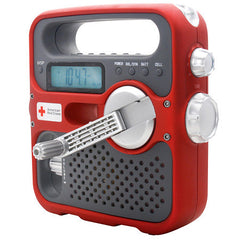
Now, every emergency kit should have a battery or crank powered radio in it so that if the power goes out, you'll still be able to know what is going on in the community.  But I just happen to have a super fantastically deluxe version, which always inspires” ooo’s” and “ahh’s” from my audiences. 

This handy gadget, pictured above, has a built in LED light, a red flashing strobe light, 4 different power sources (crank power, batteries, electric, and solar power), a USB cell phone charger, NOAA weather-band with alert, and an AM/FM digital tuner!! And to top it all off, it is red!   

Do you have a favorite item in your emergency kit? If yes, please share below!!

Don’t have an emergency kit yet? Click here to get more information on how to make one!
Want to get one of these handy all in one radios? Click here to order one!

Friday, July 15, 2011

Nothing like a Clean Sweep

Photo courtesy of housecleaningmaids.com
It’s “Clean Sweep” here at the Chapter today, which means it’s time to organize, clean, and get ourselves back into top notch working order!  Since most of us here consider this building our home away from home, you can imagine the amount of stuff we collect between Clean Sweep days, and, even better, the stuff that we thought we lost, but find! 
Another great thing that I like to incorporate into “Clean Sweep” days is my emergency kit.  We always suggest that people go through there emergency kit about 1 time a year to make sure that:
  •         Nothing in your kit is expiring within the next 2-3 years
    •         If it is, substitute the older items out for newer items
    •      Remember to check you water’s expiration date!
  •         Nothing is leaking
  •        All of your flashlights and radios work
  •        Your batteries are still sealed and haven’t broken
  •        No one has resorted to sneaking your emergency kit food since your cupboards were empty

Just this quick check will make sure that the time you took to make and maintain your emergency will not be for naught, AND  if an emergency comes, you won’t be stuck risking your life eating expired food, drinking expired water or stuck in the dark because you failed to check to make sure your flashlight was still in working order. 
For more information on making and maintaining an emergency kit, click here!

Wednesday, July 13, 2011

Pro-whistler

As people grow older it seems as if whistles get less and less fun.  I remember happily deafening myself throughout my childhood to make that shrilling noise and now I jump a foot in the air, search all around to find out who’s making the ruckus, breathe a sigh of relief when I realize it’s just a kid having fun, and then cringe at the endless piercing.  
Photo courtesy of buisness-ethics.com


But as an emergency preparedness promoter I cannot say that I wish I could ban all whistles from the face of the earth.  Besides the fact that sports games would be a complete mess without that resounding noise, they are also a fabulous way to draw attention to yourself.  This is why during every presentation I give in the community, whistles are always on my agenda.  Why you ask?

Say that you are sleeping in your room one evening and you awake to the sounds of fire alarms.  When you get to the door, it’s hot, and smoke is beginning to enter the room.  What do you do? If it’s not possible to get out through another door or safely exit a window, you should, if you have a phone in your room, call 9-1-1 and tell them that your house is on fire and that you’re are stuck.  You can then crack a window (DON’T open it all the way unless you are going to jump or be rescued immediately) for fresh air, grab your trusty whistle (which we advise everyone to have in each bedroom of their home) and blow it.  Not only will the noise of the whistle travel much farther and much louder than your voice but it will also prevent you from inhaling as much smoke as you would be yelling. 
Aside from by your bedside, we also advice you to have a whistle in your emergency kit incase you’re ever trapped or need to get someone’s attention quickly during an emergency and/or disaster as well as have a whistle on your keychain so that you will always be able to draw attention to yourselves if you need help.

For more information on what else you should pack in your emergency kit, click here!

Thursday, July 7, 2011

What in the world is a traveler's check?

A few weeks ago, we had a weeklong segment on the blog about the one item that employees here at the Buffalo Chapter always make sure we have in our emergency kits. Ken Turner, our Senior Director of Emergency Services, mentioned that he always makes sure that he has traveler’s checks packed in his. 
Now, I am not afraid to admit that I really don’t know that much about travelers checks and certainly have no idea where to get them, so, I thought it would be worth an investigation…  After all, if the Senior Director of Emergency Services recommends having traveler’s checks on hand, I think it’s safe to say it’d be a good idea to get them!

Photo courtesy of lamoneta.com

So, first things first, what is a traveler’s check?
Traveler’s checks are pre-payed checks that can generally be used world-wide.  
How do they work?
When you purchase travelers checks, they have a designated amount printed on them (i.e $20.00, $50.00, $100.00), your name, the date, where you purchased the cards from, a barcode, and your signature. 
When you use the checks, you show ID and then again sign the check to prove that it is your signature. 
If the item you buy is less than the exact price of the traveler’s check, you receive the local currency in change. 
If you lose your checks or they are stolen, you may be able to have them replaced as long as you have a copy of the receipt.   
Most banks (I.e. M&T, Bank of America, HSBC)
Certain credit card companies (I.e.
American Express and Visa)AAA club
What’s the advantage of them?
If they are ever lost or stolen they can be replaced! As long as you keep the receipt
They are accepted world-wide
They never expired
So, our Senior Director of Emergency Services was right in saying that we should keep travelers checks in our emergency kits! If the electricity ever goes out, traveler’s checks can still be used AND if your checks are ever stolen you can have them reissued and not lose out on any of your money!
For more information on what to pack in your emergency kit, click here!
Where can you get them?