Showing posts with label shelter in place. Show all posts

Wednesday, September 28, 2011

Preparedness month... day 28!

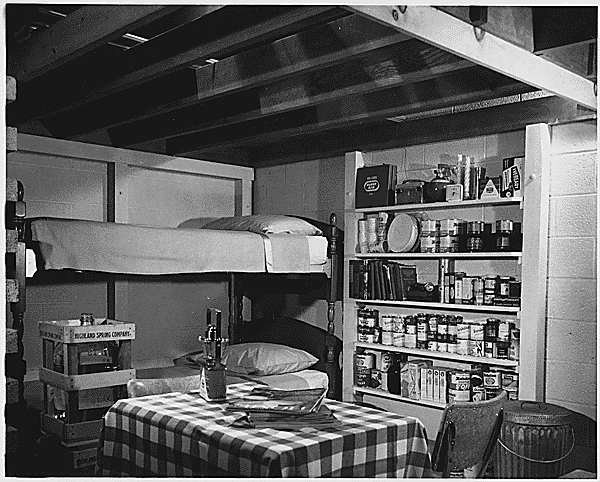
Photo courtesy of www.ballew.org
It's preparedness month! And we’re celebrating with 30 days full of tips on our favorite topic… preparedness!! If you’ve missed out on any of them, click here to take a trip through the month of September and catch up!!

Preparedness Tip #28
When there is concern about a potential exposure to a chemical or other airborne hazard, local officials may advise you to "shelter-in-place “ and “seal the room.” This is different from taking shelter on the lowest level of your home in case of a natural disaster like a tornado. If you believe the air may be badly contaminated or if you are instructed by local officials, follow the instructions below to create a temporary barrier between you and the contaminated air outside.
To shelter-in-place and seal-the-room:
--Close and lock all windows and exterior doors.
--Turn off all fans, heating and air conditioning systems.
--Close the fireplace damper.
--Get your disaster supplies kit and turn on your battery-powered radio.
--Go to an interior room that is above ground level and without windows, if possible. In the case of a chemical threat, an above-ground location is preferable because some chemicals are heavier than air, and may seep into basements even if the windows are closed.
--If directed by local authorities on the radio, use duct tape to seal all cracks around the door and any vents into the room. Tape plastic sheeting, such as heavy-duty plastic garbage bags, over any windows.
--Listen to your radio or television for further instructions. Local officials will tell you when you can leave the room in which you are sheltering, or they may call for evacuation in specific areas at greatest risk in your community

Saturday, September 24, 2011

Preparedness month... day 24!

Photo courtesy of anytimesign.com
It's preparedness month! And we’re celebrating with 30 days full of tips on our favorite topic… preparedness!! If you've missed out on any of them, click here to take a trip through the month of September and catch up!!

Preparedness Tip #24
Understand that during an emergency you may be asked to “shelter-in-place” or evacuate. Plan for both possibilities and be prepared to listen to instructions from your local emergency management officials. Visit
 Ready.gov and www.redcross.org/preparedness for more information on sheltering-in-place.

Friday, February 18, 2011

Shelter-in-place? Like a blanket fort?

While checking in with some of the blogs we follow here at the Red Cross, I came across a really interesting article posted by the Disaster Preparedness Blog about sheltering in place.  Not really a topic anyone thinks about... but they should! Disasters can happen anywhere, and the fact that we have a power plant, major train lines, Thruways and a whole other country right next to us makes the chance of us having a disaster that causes particulates to be released in the air a pretty high possiblity! Does your household know what to do when a shelter in place warning is issued? 

What is sheltering in-place?
·    Shelter-in-place is an emergency precautionary method that is put in place if there is a situation where local government believes that hazardous materials may have been released into the atmosphere.
o   This is not the same thing as going to a shelter in case of a storm!
§  Depending on where you are, there are different steps you should take.  The information below is focused on sheltering at home.    
Why might you need to shelter-in-place?
·   Chemical, biological, or radiological contaminants may be released accidentally or intentionally into the environment. Should this occur, information will be provided by local authorities on television and radio stations on how to protect you and your family.
How will you know you need to shelter-in-place?
·   Information will most likely be provided on television and radio, so it is important to keep a TV or radio on, even during the workday.
Where should you shelter in place?
·   You should select a small, interior room with no or few windows to take refuge in that has a hard-wired telephone and is above ground level
o   In the case of a chemical threat, an above-ground location is preferable because some chemicals are heavier than air and may seep into basements even if the windows are closed 
How do you shelter in place?
·   Get your “home” emergency supply kit
o   Need help creating a kit? Visit us online for tips on what to pack!
o   Want your employees, co-workers, parishioners, tenants or students to learn more about getting prepared? Contact Denise Herkey-Jarosch at 716.878.2231 or HerkeyJaroschD@usa.redcross.com to schedule a Be Red Cross Ready presentation!
·   Close and lock all windows and exterior doors.
·   If you are told there is danger of explosion, close the window shades, blinds, or curtains.
·   Turn off all fans, heating and air conditioning systems.
·   Close the fireplace damper.
·   Make sure that you have a radio and that it’s working
o   News stations will tell you if the shelter in place warning has been lifted or if you need to evacuate.
·   Bring your pets with you, and be sure to bring additional food and water supplies for them.
·   Use duct tape and plastic sheeting (heavier than food wrap) to seal all cracks around the door and any vents into the room.
Watch this great Red Cross video that goes over sheltering in-place.

Remember that instructions to shelter-in-place are usually provided for durations of a few hours, not days or weeks. There is little danger that the room in which you are taking shelter will run out of oxygen and you will suffocate!
For more information on sheltering in place, check out this great informational sheet provided by the Center for Disease Control (CDC) or view the Red Cross’ sheltering in-place pamphlet below to know what to do when you're not home!