Wednesday, September 14, 2011

It's preparedness month... day 14

It's preparedness month! And we’re celebrating with 30 days full of tips on our favorite topic… preparedness!! If you’ve missed out on any of them, click here to take a trip through the month of September and catch up!!

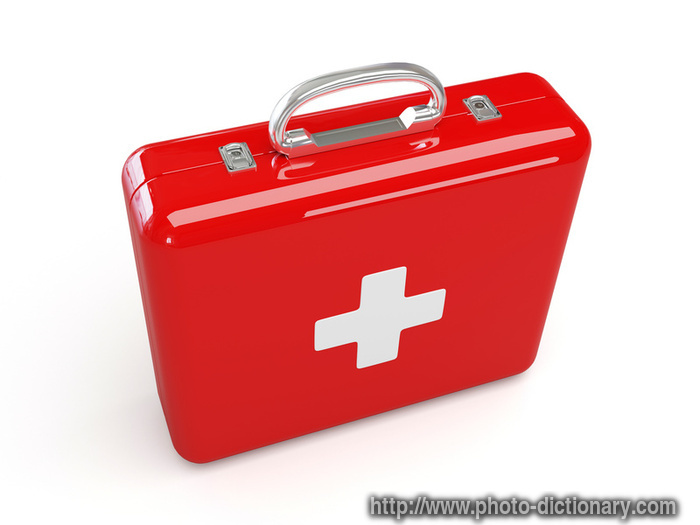
Photo courtesy of photo-dicts.faqs.org
Preparedness Tip #14
Take a minute to check your family’s first aid kit, and note any depleted items — then, add them to your shopping list. 

Don’t have a first aid kit? Add that to the list or build a kit yourself.  Just add the following items to your shopping list and assemble a first aid kit. 


Have a car? We recommend creating a kit for each of them as well.


We recommend each first aid kit have:
--(20) adhesive bandages, various sizes
--(1) 5" x 9" sterile dressing
-- (1) conforming roller gauze bandage
--(2) triangular bandages
--(2) 3 x 3 sterile gauze pads
--(2) 4 x 4 sterile gauze pads
--(1) roll 3" cohesive bandage
--(2) germicidal hand wipes or waterless alcohol-based hand sanitizer
--(6) antiseptic wipes
--(2) pair large medical grade non-latex gloves
--Adhesive tape, 2" width
--Anti-bacterial ointment
--Cold pack
--Scissors (small, personal)
--Tweezers
--CPR breathing barrier, such as a face shield
--First Aid Manual
--Aspirin or non-aspirin pain reliever
-- Anti-diarrhea medication
--Antacid (for stomach upset)
--Syrup of Ipecac (use to induce vomiting if advised by the Poison Control Center)
--Laxative
--Activated charcoal (use if advised by the Poison Control Center)
--Prescription drugs, as recommended by your physician, and copies of the prescriptions in case they need to be replaced

For more information about first aid kits, visit www.redcross.org.

Tuesday, September 13, 2011

It's preparedness month... day 13

It's preparedness month! And we’re celebrating with 30 days full of tips on our favorite topic… preparedness!! If you’ve missed out on any of them, click here to take a trip through the month of September and catch up!!

Photo courtesy of inhabitots.com
Preparedness Tip #13
Preparing for emergencies needn’t be expensive if you’re thinking ahead and buying small quantities at a time. Make a list of some foods that:


--Have a long shelf-life and will not spoil (non-perishable)
--You and your family like
--Do not require cooking
--Can be easily stored
--Have a low salt content as salty foods will make you more thirsty

Keep the list in your purse or wallet and pick up a few items each time you’re shopping and/or see a sale until you have built up a well-stocked supply that can sustain each member of your family for at least three days following an emergency.


For more great tips, visit the Red Cross online!

Monday, September 12, 2011

It's preparedness month... day 12

It's preparedness month! And we’re celebrating with 30 days full of tips on our favorite topic… preparedness!! If you’ve missed out on any of them, click here to take a trip through the month of September and catch up!!

Preparedness Tip #12
You should keep enough supplies in your home to meet the needs of you and your family for at least three days. Build an emergency supply kit to take with you in an evacuation. The basics to stock in your portable kit include: 


  • Water
  • Food
  • Battery-powered radio
  • Flashlight with extra batteries
  • first aid supplies
  • A change of clothing
  • A blanket or sleeping bag
  • A wrench or pliers
  • Whistle
  • Dust mask
  • Plastic sheeting
  • Duct tape
  • Trash bags
  • A map
  • A manual can opener for canned food
  • Special items for infants, elderly, the sick or people with disabilities

Keep these items in an easy to carry container such as a covered trash container, a large backpack, or a duffle-bag.


For more information about emergency supply kit basics, click here!

Sunday, September 11, 2011

It's preparedness month... day 11

It's preparedness month! And we’re celebrating with 30 days full of tips on our favorite topic… preparedness!! If you’ve missed out on any of them, click here to take a trip through the month of September and catch up!!

Photo courtesy of elec-intro.com
Preparedness Tip #11
What if disaster strikes while you’re at work?  Do you know the emergency preparedness plan for your workplace?  While many companies have been more alert and pro-active in preparing for disasters of all types since the September 11, 2001 attacks, a national survey indicates that many employees still don’t know what their workplace plan is for major or minor disasters. If you don’t know yours, make a point to ask. Know multiple ways to exit your building, participate in workplace evacuation drills, and consider keeping some emergency supplies at the office. 


Visit www.ready.gov and click on Ready Business for more information about business preparedness.