Friday, September 16, 2011

Preparedness month... day 16!

Photo courtesy of chb-tech.com
It's preparedness month! And we’re celebrating with 30 days full of tips on our favorite topic… preparedness!! If you've missed out on any of them, click here to take a trip through the month of September and catch up!!

Preparedness Tip #16
One of the easiest ways you can prepare for emergencies is to keep some supplies readily available. Every kit is unique and can be tailored to meet the specific needs of your family, but below is a general list of supplies you may want to consider:

--Tools and Supplies (Essential Items are Marked with an Asterisk *)
  --Mess kits, or paper cups, plates, and plastic utensils
  --Emergency preparedness manual and a copy of your disaster plan, including your emergency contacts list
  --Battery-operated radio and extra batteries*
  -- Flashlight and extra batteries*
  --Cash or traveler's checks, change*
  --Non-electric can opener, utility knife*
  --Fire extinguisher: small ABC type stored near where fires are likely to occur such as a kitchen, or near a fireplace. It should not be kept in the disaster supplies kit.
  --Tube tent
  --Duct Tape*
  --Compass
  --Matches in a waterproof container
  --Aluminum foil
  --Plastic storage containers
  --Signal flare
  --Paper, pencil*
  --Needles, thread
  -- Medicine dropper
  --Shut-off wrench or pliers, to turn off household gas and water
  --Whistle*
  --Plastic sheeting*
  --Map of the area (for locating shelters and evacuation routes)

(To find out more necessary items, check back tomorrow!)

Thursday, September 15, 2011

It's preparedness month... day 15!

It's preparedness month! And we’re celebrating with 30 days full of tips on our favorite topic… preparedness!! If you’ve missed out on any of them, click here to take a trip through the month of September and catch up!!
photo courtesy of triplepundit.com

Preparedness Tip #15
Keep at least a three-day supply of water per person. Store a minimum of one gallon of water per person per day (two quarts for drinking, two quarts for food preparation and sanitation). Store water in plastic containers such as soft drink bottles. Avoid using containers that will decompose or break, such as milk cartons or glass bottles. A normally active person needs to drink at least two quarts of water each day. Hot environments and strenuous activity can double that amount. Children, nursing mothers, and people who are sick will also need more.
REMEMBER, water bottles/containers have expiration dates! Check them before consuming.

Wednesday, September 14, 2011

It's preparedness month... day 14

It's preparedness month! And we’re celebrating with 30 days full of tips on our favorite topic… preparedness!! If you’ve missed out on any of them, click here to take a trip through the month of September and catch up!!

Photo courtesy of photo-dicts.faqs.org
Preparedness Tip #14
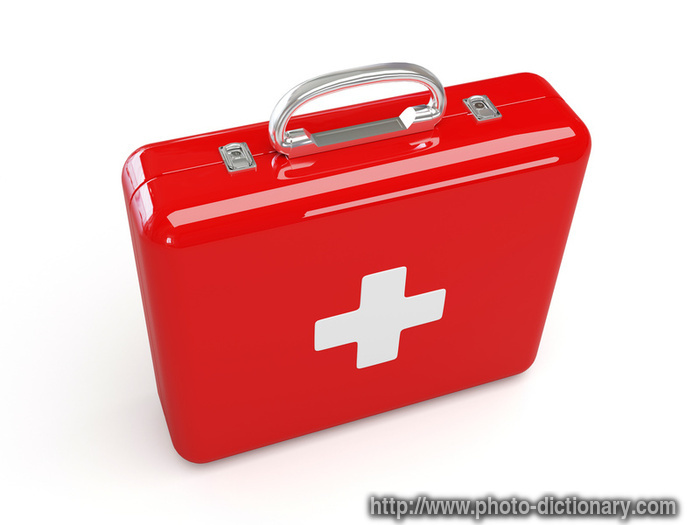
Take a minute to check your family’s first aid kit, and note any depleted items — then, add them to your shopping list. 

Don’t have a first aid kit? Add that to the list or build a kit yourself.  Just add the following items to your shopping list and assemble a first aid kit. 


Have a car? We recommend creating a kit for each of them as well.


We recommend each first aid kit have:
--(20) adhesive bandages, various sizes
--(1) 5" x 9" sterile dressing
-- (1) conforming roller gauze bandage
--(2) triangular bandages
--(2) 3 x 3 sterile gauze pads
--(2) 4 x 4 sterile gauze pads
--(1) roll 3" cohesive bandage
--(2) germicidal hand wipes or waterless alcohol-based hand sanitizer
--(6) antiseptic wipes
--(2) pair large medical grade non-latex gloves
--Adhesive tape, 2" width
--Anti-bacterial ointment
--Cold pack
--Scissors (small, personal)
--Tweezers
--CPR breathing barrier, such as a face shield
--First Aid Manual
--Aspirin or non-aspirin pain reliever
-- Anti-diarrhea medication
--Antacid (for stomach upset)
--Syrup of Ipecac (use to induce vomiting if advised by the Poison Control Center)
--Laxative
--Activated charcoal (use if advised by the Poison Control Center)
--Prescription drugs, as recommended by your physician, and copies of the prescriptions in case they need to be replaced

For more information about first aid kits, visit www.redcross.org.

Tuesday, September 13, 2011

It's preparedness month... day 13

It's preparedness month! And we’re celebrating with 30 days full of tips on our favorite topic… preparedness!! If you’ve missed out on any of them, click here to take a trip through the month of September and catch up!!

Photo courtesy of inhabitots.com
Preparedness Tip #13
Preparing for emergencies needn’t be expensive if you’re thinking ahead and buying small quantities at a time. Make a list of some foods that:


--Have a long shelf-life and will not spoil (non-perishable)
--You and your family like
--Do not require cooking
--Can be easily stored
--Have a low salt content as salty foods will make you more thirsty

Keep the list in your purse or wallet and pick up a few items each time you’re shopping and/or see a sale until you have built up a well-stocked supply that can sustain each member of your family for at least three days following an emergency.


For more great tips, visit the Red Cross online!