Showing posts with label #WNY. Show all posts

Thursday, February 13, 2025

"We've been together ever since": Red Crossers find love & laughter at local blood drive

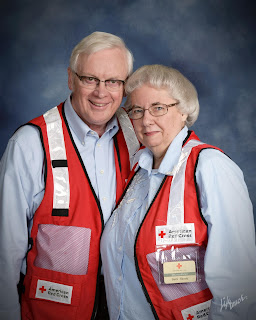
When Tony Addotta first signed on to volunteer with the American Red Cross of Western New York, the retired truck driver was looking for something new to utilize his talents. Little did he know that his new volunteer role with the Red Cross would also lead him to the love of his life.

“It was my first volunteer position. Channel 17 had a volunteer fair. I went downtown and there were a lot of different tables. The Red Cross had a sign in table, and I guess five people signed up and I was the only one who showed up the next Monday. Shawn O’Hargan [Regional Market Manager, American Red Cross Blood Services] had her pastries and stuff like that, so I started driving with blood services and you know, it was nice. I was retired, so I was just playing golf and taking naps.”

Seated next to him on a sunny afternoon, Nancy Despard laughed. “Oh, he’s good at naps!”

That was nearly 17 years ago. Roughly one year after Tony signed on as a volunteer, Nancy found herself in a similar position.

“I actually saw it in the paper to volunteer,” she explains. “My parents were actually blood donor ambassadors here and then they moved to Myrtle Beach and did it down there, too. I thought, ‘Oh Mom and Dad did this, so I can do it, too.’  Then we met at a blood drive.”

“Oh, did we?” Tony laughs.

“You came in – he was a usurper. He came in and was supposed to be getting people to sign up to donate double reds and I’m like, why is this guy from Buffalo honing in on our drive? So, he didn’t talk much to me,” Nancy recalls.

With a sly smile, Tony is quick to explain, “I was out in the hallway, recruiting double reds – that was my job!”

Although it would be months before the pair would ultimately meet again, Nancy shares that she knew early on there were sparks.

“I love joking around and stuff and I thought, why couldn’t I have met him before?”

Their shared love of helping others would bring them together again when Tony, ever the gentleman, volunteered to drive a group of Red Crossers from Buffalo to the Greater Rochester chapter to tour the West Henrietta Blood, Platelet and Plasma Donation and Processing Center

“Well, Tony drove the van. And he makes anybody in the backseat wear a seatbelt.”

Tony interrupts with a big laugh, “Well, yeah! Wherever they’re sitting!”

“So, he climbs over the backseat, because I’m behind the driver’s side, to hook up my seatbelt for me.””

“You looked like you needed help!”

“So, we went down to West Henrietta and had lunch, and the group stopped at a rest stop and when I came out of the restroom, and he was waiting out there for me. So, he’s walking me out and he said, that he was membership chairman for the American Legion post and hands me his card for that and says, ‘Here, give me a call.’ Now, I’m like, not young – I don’t if know he’s hitting on me. I call my sister, and asked her, do you think he needs a volunteer there or something? That’s the only thing I could think of that he would need me to call him. Finally, after a few days, I call him and we’re talking and that and I realize, I guess he doesn’t want a volunteer! That was October 2010. We’ve been together ever since.”

In that time, the pair have continued to volunteer with the Red Cross. Nancy now works to schedule volunteers for blood drives across four counties within the Buffalo area. Tony serves as a transportation specialist for biomedical services in the Buffalo district and was one of several volunteers who drove through an historic and deadly blizzard to ensure that blood products were delivered to area hospitals in December, 2022.

“We were just driving,” he explains. “That was [Transportation Specialist] Rachel Elzufon Couch’s leadership. We may have won an award, but it was her leadership that made it happen. We were just doing our job.”

“The first time I was ever driving with him, I looked at all the blood in the back and I realize, we’re saving people’s lives by doing this,” Nancy remarks. “It was really – it really meant something to me that what we’re doing is really saving people’s lives.”

While his fellow volunteers received the Blood Services Hero award at the 2023 Western New York Real Heroes luncheon, Tony accepted the award while awaiting open heart surgery at a local hospital with Nancy at his side. Just a few days prior to the event, doctors discovered a large aneurysm in his aortic valve.

“I was a walk-in. They couldn’t believe I was a walk-in,” he explains. “I only went to the hospital because I couldn’t sleep for two days.”

Nancy immediately takes on a more serious tone: “He is a miracle walking. The doctor said they’d never seen one that big before ever. It could have broken like that.”

But their playful banter quickly returns.

“Well then It’s a good thing you don’t hit me!”

The couple shares that Tony’s surgery and recovery helped put things into perspective, both in their personal lives and their roles at the Red Cross.

“I’m on a crusade,” Tony says. “I stood up one day and said to the other drivers that I know that sometimes you think this might be nothing, but all you guys helped me to survive because the blood had to be there, and it all takes all the people. People can take it for granted and I thanked them all, because as you know, it’s the blood donated today that helps tomorrow. I’m one of those people that you’re donating for. It takes a village.”

That’s the message the couple shares with fellow and prospective volunteers – and even blood donors alike.

“Sometimes at the end of my drives, I will stop into a blood drive and tell a blood donor, ‘I just drove hundreds of miles to say thank you!’ And then it gets everybody laughing. It’s very rewarding. It becomes a place where you go in now and you get to see your friends. I still have my naps!”

Nancy agrees, “I tell volunteers, this is the easiest way that you can save somebody’s life.”

As for their secret to making it work as a couple, Tony says it’s simple:

“You have to have a sense of humor. It keeps things in perspective, I think. She has a good soul and a soft heart.”


Meg Rossman, Regional Communications Manager, American Red Cross of Western New York

Thursday, May 16, 2024

Military Appreciation Month: Local Red Crosser bringing a piece of home to servicemembers overseas

The mission of the American Red Cross was born on the battlefield, with founder Clara Barton providing support to soldiers on Civil War battlefields. More than 140 years later, it’s a mission that the Red Cross proudly carries to this day through Service to the Armed Forces. The focus of that mission is to support military members, veterans and their families throughout all stages of their military career.

From helping to connect families with servicemembers during life’s emergencies through the Hero Care Network, to building care kits and connecting veterans and military families with critical resources here at home and providing support to veterans at our nation’s VA hospitals, the Red Cross is there. Red Crossers like Darla Roote are also stationed across the globe to help support U.S. servicemembers to bring help and hope (and a little bit of home) to those men and women stationed overseas.

As a Service to the Armed Forces Program Specialist for the Western New York region who retired in 2022 with 40 years of military service, Darla is currently on a six-month deployment helping to support U.S. military members stationed in Poland. Darla left in February for Poland to help bring a piece of home to nearly 1,200 men and women living on three U.S. military bases in Poland. This Military Appreciation Month, Darla gave an update on some of the connections she’s made so far, activities she has planned to help bring some levity to our troops and what she’s learned along the way.

Given your military experience, was there an adjustment period for you and how has your deployment gone so far?

The trip over was good. I made it and stepped right into it! My predecessor did a really good job with what she had and was building it up. Now, I’m building a space for one base, and I’ve almost got a space for another. That one really needs something as the only thing that have is an MWR (Morale, Welfare & Recreation) and it’s also a tent base. At the moment, I don’t have transportation. I did all the training for the driver’s license and right now we’re working on an MOU with the USO because they have a Jeep, so I can use that to get between the three bases. It can be hard to get to some of those outlying areas.

What does a typical day look like for you?

In the morning and lunch, I sit with people at breakfast to chat and say ‘have a good day,’ just so they see me. While everyone is out working on their mission, I’m making flyers and planning events that I’m going to have. It’s mingling and planning events – most of them are on the weekend, because that’s when most of them are here. I do have some evening events, too. It really depends on the day and what they’re [soldiers] are doing, if they are out on a mission and many of them are it can change.

Talk about some of the events you’ve planned for those on base, and some upcoming projects you have planned.

Line dancing! Line dancing has gone really well! We’ve also got a murder mystery coming up. It’s cowboy themed, so it will fit in with the line dancing, but it’s murder mystery for up to 20 people. Hopefully, more come in and watch and they’ll mingle and relax.

We have a great volunteer with the line dancing and it’s really been building. More and more people are coming in and trying it and even though we are all screwing it up – it’s a lot of fun. It’s a great feeling because I’m giving them options. You don’t have to sit in your room. And with the new space open, those who want to sit some place quiet and read a book, they can do that, too. It’s not a huge space, but it’s quiet and they can relax. I even got blankets, because I don’t care if it’s 90 degrees out, if I sit down with a book, I want a blanket! 

We have sports and yoga on Sundays, we do a walking club on Saturday. We also have another paint and sip scheduled for this month, along with trivia and s’mores by the fire. We’re collaborating with the USO and MWR on a few events – we’ll have a big sports day for Armed Forces Day. Long-term, though, my priority is to help secure some spaces for the next person to get in and help to start them up. I’m also really pushing for a car [to help get between bases]. That’s pretty high on my priority list.

What have you taken away from this deployment with the Red Cross as someone who has also served in the military?

You know, these guys are great and they’re doing fairly good. There are some that are struggling just being away from home. They’re young – some are just 19-20 years old. When I first came, I thought it might be better if I didn’t broadcast that I had a military background because I didn’t necessarily want to say, ‘Hey, I’m just like you!’” I think that was a mistake. I think there were some who might have looked at me as a do-gooder, but not someone who has necessarily been in their shoes. So, I’ve been spreading the word that yes, I was in the military, and I have been in your shoes, and I get it.

May is Military Appreciation Month. What would you like readers to know about the service men and women you’re helping to support through your role with the Red Cross?

These guys are great. They are here for the mission they understand they’re here for the mission and when they’re tasked to do something – you don’t hear complaints. They are up and at ‘em. I was talking to one guy who said he had to leave at 3:45 am and he said, ‘it’s the way it goes.’ They’re very resilient in what they have to do and just keeping the busy is the thing we have to do. They’re a great group of kids.

You can learn more and help support military members, veterans and their families through Service to the Armed Forces this Military Appreciation Month and year-round here. 

Thursday, March 9, 2023

Springing ahead? Don't forget to "Turn and Test"


Daylight saving time begins this Sunday, March 12, and the American Red Cross of Western New York encourages everyone to TURN your clocks forward one hour, and TEST your smoke alarms.

Did you know that having working smoke alarms can cut the risk of dying in a home fire by half? Home fires are the nation’s most frequent disaster with Red Cross volunteers responding to an emergency every 8 minutes, on average. In the month of February alone, Red Cross of WNY Disaster Action Team (DAT) members provided immediate emergency assistance in the aftermath of home fires to 269 individuals across our region.

That’s why it’s critical to “Turn and Test” this weekend and take these lifesaving steps to keep your loved ones safe in the event of a home fire. 

·         Install smoke alarms on every level of your home, including inside and outside bedrooms and sleeping areas. Test alarms monthly and replace the batteries at least once a year if your model requires it.

·         Replace smoke alarms that are 10 years or older. That’s because the sensor becomes less sensitive over time. Check the date of your smoke alarms and follow the manufacturer’s instructions.

·         Practice your two-minute escape plan. Make sure everyone in your household can get out in less than two minutes — the amount of time you may have to get out of a burning home before it’s too late. Include at least two ways to get out from every room and select a meeting spot at a safe distance away from your home, such as your neighbor’s home or landmark like a specific tree in your front yard, where everyone knows where to meet.

·         Teach children what a smoke alarm sounds like. Talk about fire safety and what to do in an emergency.

Visit redcross.org/fire for more information, including an escape plan to practice with your family. You can also download our free Emergency app by searching for “American Red Cross” in app stores. 

HOME FIRE CAMPAIGN SAVING LIVES The Red Cross responds to more than 60,000 disasters every year and most of them are home fires. To help prevent fire-related deaths and injuries, the Red Cross launched the Home Fire Campaign with community partners in 2014 to reduce fire-related deaths and injuries.

Recently, with support from thousands of community partners, the campaign met its goal of installing 2.5 million free smoke alarms and making 1 million households safer across the country. So far, the Home Fire Campaign is credited with saving more than 1,583 lives in the U.S. Because home fires remain a daily threat and the campaign has made a lifesaving difference, the Red Cross will be continuing the program with community partners as part of its standard services across the country.


Thursday, June 9, 2022

"I am here to serve, not to be served."

Each year, while memories and tributes from the observances of Memorial Day, Independence Day and Veterans’ Day rightfully focus the spotlight on the contributions and sacrifices of military members, the American Red Cross Service to the Armed Forces Program (SAF) maintains an ongoing, vital presence in providing support to active and retired military and their families.  Perhaps nothing symbolizes this more than the dedicated volunteers who form the backbone of the SAF program, and those who make service to others their life mission – like Mike Hoplight. 

The Niagara Falls native’s commitment to others goes back to age 14, when he volunteered at the Niagara Falls Boys and Girls club, showing cartoons to younger children.  Now, at age 75, he hasn’t let up a bit.

“My motto since I was 14 years old is that I am here to serve, not to be served.” 

Hoplight joined the U.S. Army in 1967 and following the completion of a four-year active service commitment, served an additional 25 years with the Army Reserves, retiring in 1996 as a Sargent First Class – E7.  During this time, he served in West Germany/West Berlin, including at the famous CheckPoint Charlie border crossing between East and West Germany during the Cold War.

“I was a Wall Rat,” he remembers, explaining how he assisted people who were attempting escape from the communist east side.  While stationed in West Berlin he also was assigned to the Presidential Guard for President Richard M. Nixon during the former president’s visit for the Four-Power Talks that included the U.S., Great Britain, France and Russia.

“They met at the old Nazi headquarters, and when the president was moving, we were his first line of defense. We couldn’t look at him and you could tell who everyone else was by their lapel pins,” he recalled, referring to the presence of the Secret Service and other security agencies.  Hoplight can still reel off the names of the other world leaders in attendance as well.    

Still, after nearly three decades of service to his country, Hoplight was not ready to let go of his commitment to being of service to others, which would eventually include his retired military family members.  In 1996, coinciding with his retirement from the Army Reserves, Hoplight joined the Red Cross as a volunteer.  Over the past 26 years he has continued to volunteer his time and talent, initially serving within the Disaster Services team as a Mass Care/Shelter Lead.  Hoplight worked as part of relief teams responding to several high-profile national disasters, including Hurricanes Katrina, Irene and Ike, the latter where he became certified for running a Mega Shelter, which serves more than 1,000 people. 

“We were actually outside in tents; there were no buildings left to hold us,” he remembers of Ike’s devastation in Texas.  Overall, he was deployed 22 times to more than a dozen states including Texas, Florida, Louisiana, Mississippi, Alabama, Iowa, and North Dakota, as well as in New York and New Jersey during five assignments in response to Superstorm Sandy.

It has been his service to his fellow veterans in western New York as an SAF volunteer, however, that shines the spotlight on Hoplight and elicits genuine devotion and contentment when he talks of his work. He is a lead volunteer at the Buffalo VA; providing support to veterans in long term care on Wednesday and Friday mornings and entertaining them with unique culinary celebrations such as “Timbits and Coffee” (from a regional Tim Horton’s Donut chain), SPAM Day and Sardine & Crackers Day.  The celebrations may seem funny in nature, but are extremely meaningful to the veterans who partake in them.

“Someone contacted me once and said ‘how can you give veterans SPAM and sardines, that’s disgusting,’” he said, going on to point out that for many it is a common and shared experience.

“In the military, everyone eats sardines or SPAM for the energy.  All those guys (veterans) remember it, it’s part of their experience,” he said.  “All this stuff – the Timbits, SPAM and Sardines – is meant to get the guys out of their rooms.  These are patients in long term care or hospice, and it’s my job to get them out of their rooms, to get them distracted for a while from the fact that they have cancer, or may be dying.  Instead, we are able to laugh and share a few jokes.” 

The Buffalo VA also happens to be one of the locations in the VA systems that offers the No Veteran Dies Alone program, designed to provide companionship at the end of life for patients who may have no remaining family members.  Naturally, Hoplight sees this special role as part of his responsibility and commitment.

“We would not leave you alone on a battlefield to die, and we’re not going to leave you alone in your hospital room to die either,” he states matter-of-factly.

As much as Hoplight has given to local veterans and military families, his service has at times been at a national level.  In yet another role as an SAF reservist/mobile staff member for Red Cross National Headquarters, he has deployed to support active military in combat locations three times; twice to Iraq and once to Afghanistan. The SAF reservist/mobile role is not your typical Red Cross assignment.  It is highly competitive and only those who meet all requirements, including health requirements and security clearances, are eligible to be part of this elite group.  These Mobile Staff Members provide direct service delivery (e.g., emergency communication messaging and comfort and care services) to service members deployed across the globe. 

During his eight months in Afghanistan, Hoplight helped evacuate the wounded from Bagram Air Base.

“Every morning at 3:00 a.m, a C-17 would leave for a U.S. military hospital in Germany and another C-17 would leave for Dover (Delaware).  That was a tough assignment.”

Still, instead of seeking respite in his off-hours, Hoplight volunteered his time in Egyptian and Korean hospitals set up to help wounded civilians, including children injured by mines.

“You have to understand,” he explained, “that you’re in a room (on base) that you sleep in and if you extend your arms to your sides, you can touch both walls.  There’s a space heater in the hallways, but maybe not in your room.  We were in the mountains and it was cold, so you kept moving.  I didn’t go there to sit in my room or hang out in the coffee shop. I went there to serve.”

Now a resident of Sanborn, New York, a small town wedged between Niagara Falls and Lewiston, Hoplight has been married for 54 years and has two grown daughters and five grandchildren.  They understand and have supported his service to the military.

“My wife knew of my commitment to the military.  I always took care of them (his family) but my wife knew what my calling was.”

His commitment continues – and its impact is great.  The Buffalo VA counts more than 50,000 outpatients annually and, as Hoplight emphatically states, “It’s our duty to treat them right.”  He does just that, not only in Buffalo, but at the Batavia VA as well.  Still, despite all that he has contributed, it is Hoplight who extends gratitude to the Red Cross.

“I’m just grateful that the Red Cross has given me the opportunity to still serve,” he says.  “That’s the most important thing to me….to serve this country.” 

Within SAF, Hoplight holds the following lead positions:

MEPS Briefing Lead

VA Representative for Batavia and Buffalo VA

WNY SAF Advisory Committee Member


Other organizations he volunteers for are:

American Legion

VFW

Town of Niagara Lions Club

Niagara County Veterans Court; Mentor

Nat’l VA Advisory Committee on cemeteries and memorials; native American and Alaskan Native work group

Missing In America Committee, Washington DC

Four Chaplains society legion of honor member

American Patriot


Tuesday, May 24, 2022

Summer plans include water fun, camping, grilling? Then these tips are for you.

Memorial Day is the unofficial start to the summer season and a time when many of us make plans to make the most of the longer days and warmer weather. Whether your plans include fun in the water, camping or grilling your favorites, the American Red Cross of Western New York has some resources you can use to help you have a safe summer. And don’t forget your furry friends — there are even some safety tips to follow to help protect your pets as the weather warms up! 

WATER SAFETY

Every day, an average of 11 people die in the U.S. from unintentional drowning — and one in five of those are children 14 or younger according to the Centers for Disease Control and Prevention (CDC). The Red Cross wants everyone to know critical safety knowledge and skills that could save your life in and around the water. We encourage families to build confidence in the water by learning to be safe, making good choices, learning how to swim and how to handle emergencies. 

·         Preventing unsupervised access to water, providing constant, active adult supervision and knowing how to swim are critical layers of protection to help prevent drowning.

·         Classes to learn how to swim are available for both children and adults. Check the map for Learn-to-Swim providers in your community. Everyone should learn first aid and CPR too, so they know what to do in an emergency.

·         Download the Red Cross Swim app, sponsored by The ZAC Foundation, for safety tips, kid-friendly videos and activities, and take the free Water Safety for Parents and Caregivers online course in English or in Spanish.

·         It’s best to swim in a lifeguarded area. Always designate a “water watcher” whose sole responsibility is to keep a close eye and constant attention on everyone in and around the water until the next water watcher takes over.

·         Drowning behavior is typically fast and silent. Unless rescued, a drowning person will last only 20 to 60 seconds before submerging. Reach or throw, don't go! In the event of an emergency, reach or throw an object to the person in trouble. Don’t go in! You could become a victim yourself.

CAMPING SAFETY

If a camping trip is in your plans, know the level of ability of the people in your group and the environment around you. Plan accordingly.

·         Pack a first aid kit to handle insect stings, sprains, cuts and bruises and other injuries that could happen to someone in your group. Take a Red Cross First Aid and CPR course and download the First Aid app so that you will know what to do in case help is delayed. You’ll learn how to treat severe wounds, broken bones, bites and stings and more.

·         Sprains and falls are some of the most common misfortunes travelers may face. Falls are the biggest threat, many due to poor decision-making, lack of skill or not being properly prepared. Dehydration is also a danger. Plan ahead for these dangers.

·         Share your travel plans and locations with a family member, neighbor or friend.

·         Bring nutritious food items and water, light-weight clothing to layer and supplies for any pets. 

GRILLING SAFETY

More than three-quarters of U.S. adults have used a grill — yet, grilling sparks more than 10,000 home fires on average each year. To avoid this, the Red Cross offers these grilling safety tips:

PET SAFETY

Summer’s heat can be dangerous for your family pets. Follow these steps to take to help ensure your pet stays safe this summer.

  • Don’t leave your pet in a hot vehicle, even for a few minutes. The inside temperature of the car can quickly reach 120 degrees even with the windows cracked open.
  • Animals can suffer heat stroke, a common problem for pets in the warmer weather. Dogs with short noses or snouts, like the boxer or bulldog, are especially prone to heat stroke, along with overweight pets, those with extremely thick fur coat or any pet with upper respiratory problems such as laryngeal paralysis or collapsing trachea.
  • Some of the signs of heat stroke in your pet are heavy panting and being unable to calm down, even when lying down, brick red gum color, fast pulse rate and being unable to get up.
  • If you suspect your pet has heat stroke, take their temperature rectally. If the temperature is above 105 degrees, cool the animal down. The easiest way to do this is by using the water hose. Stop cooling the animal when the temperature reaches 103 degrees.

·     Bring your pet to the veterinarian as soon as possible as heat stroke can lead to severe organ dysfunction and damage. Download the Red Cross Pet First Aid app for instant access on how to treat heat stroke, other emergencies and general care for cats and dogs and take the Cat and Dog First Aid Online Training course.


Thursday, February 17, 2022

In their own words: Horseheads mother who required 33 units of blood following labor complications shares her story

Every two seconds someone is in need of blood.

So often we talk about that need – and the ongoing national blood shortage – in terms of our hospital partners and what that it could mean in the event of an emergency. Its significance is another matter entirely, when you’re able to see it in action or hear from those patients and their families who’ve directly benefitted from blood donations thanks to the generosity of volunteer donors.

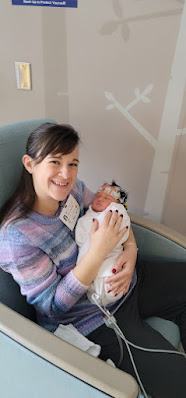
Last week, I had the opportunity to speak with Jason and Kristina Harris about the traumatic events that followed the birth of their daughter Eva in December that would have cost Kristina her life had it not been for multiple volunteer blood donors.

Below is a portion of that interview.

MR: I want to thank you guys for speaking with me this afternoon and for sharing your story with us. First and foremost, how are you all doing? How are you adjusting with your little one?

Kristina Harris: Well, other than adjusting to life with a newborn and getting less sleep and not being able to control our schedules, we're doing really well. We are happy to have these problems, so these are the these are good problems to have. Healing is going well!

MR: Absolutely and we’re glad to hear it. Talk to me about that day back in December and take me through what happened.

KH: Sure, so I'll start. I was out for a lot of the day so Jason can fill in the gaps. The facts just before we get into the experience of it, I went in to be induced for my second child and we have a 3-year-old who's just really terrific. She's bright and joyful and precocious. Really loving. And so we love being parents and were really excited to add to our family. Our three-year-old was thrilled to have her wish of having a little sister come true. She came up with the name Eva when we first told her that she was going to have a sister.

And so we went in to be induced, and things were going fine. I was sleeping around 4:00 o'clock in the morning, and I sat up and I felt really big pain. I felt like three big kicks to my left side and then like blinding pain across my ribs and a lot of difficulty breathing, and I assume that's when the placental abruption happened. Which means that the placenta detached completely in my case, which is really dangerous for me and for the baby because the baby can’t get the oxygen and other things she needs. But I didn't know that. I just felt the pain and I thought this is really bad.

Thirteen years before my parents had me, they lost a full-term baby because of a cord accident. She wanted to be induced. The cord came out and the doctor pushed it back and she felt a big kick, and then that was it. So when I felt three big kicks and pain, I didn't necessarily think that was a problem, but I thought this reminded me of my mom’s situation and I thought this is really scary and bad.

My memories after that point are few and far between. I remember when I was being prepped for the C-section, the emergency C-section, I asked the doctor if my daughter and I were going to be OK and he said he would do his best. And I had this thought that this is it for me, and that was before the real trouble began. So that's when I went out and Jason can pick up the story from there.

JASON HARRIS: So, they took Kristina back for the emergency C-section pretty quickly. I’d gotten word that Eva had been born and they were sewing up Kristina, so I thought we were in the clear at that point. A few minutes later the doctor came out to talk to me. Kristina’s body had used up all of its coagulation factors and basically there is nothing stopping the blood from pouring out of Kristina.

I could see the hallway that went into the emergency room, and I nervously watched as things had gotten worse and worse. The first thing I saw was the cart. I knew that the cart had a lot of blood products, I think it was red and white and then you know, I knew it was serious. I knew that there was a lot of bleeding and I saw a lot of other people coming through with different size coolers. I knew that she was bleeding a lot and I knew that, you know, there’s a finite supply of blood even in the best of circumstances and just thinking that I hope they had enough for her. What we later heard was that they actually had to bring in some blood products from the hospital in Elmira.

Kristina was later transported by helicopter from Corning Guthrie Hospital to Robert Packer Hospital in Sayre. Nearly 8 hours after suffering a placental abruption, doctors completed surgery and relayed to Jason that Kristina was doing well.

JH: It was a little tough to see Kristina in that kind of situation. She did a really great job recovering and you know, all the doctors that I talked with were very professional, very considerate but very honest. They were very clear that Kristina’s condition was extremely critical. But something changed and it started to work, and they did a great job, both surgical teams and we’re happy to have her here today.

MR: Absolutely. Kristina, what was going through your head when you woke up and started to realize the gravity of the situation?

KH: You know, I don’t remember too much. I wasn’t really surprised when I found out that it was not good. When I heard that they wanted to transfer me by helicopter to a hospital that was only a half hour away, I thought that was, you know, pretty serious. It was very strange to wake up knowing that I had had a baby and not be able to see her.

I didn’t know that Jason was trying to sort of shield me from any negative information about the baby, he just sort of said that she was doing OK. We later found out that she might have some problems. So she was in the NICU at Arnot Hospital and then was transferred to Rochester to another NICU. So I was in Pennsylvania and my baby was two hours north in a different hospital.

I was in a lot of pain, but I couldn’t really embrace the emotions. I’m an emotional person, but I had to shut that down anytime I would start to cry. The pain was unbearable, so I was very relieved to have my husband there. I was relieved to have my Dad there, and I was so grateful. I didn’t really learn until later the magnitude of the blood transfusion and that it took 33 people to donate for me to live. It felt and still feels surreal. I know that that happened, but I was out for a lot of it. I remember a couple of times being scared for my life and for my babies and now when I’m holding my baby and feeding her and doing all the things and dancing with my three-year-old and playing with her – I just feel overwhelming gratitude. 

That I’m here and that my daughters have a mother, and I’m so grateful that my husband has his wife. And hopefully, you know, we have a long future in front of us.

Kristina, Jason and their daughters are all doing well and settling into life as a family of four, with baby Eva growing two inches in her first month. The events of that day and the impact of blood donation on patients in need, as well as their loved ones is not lost on either Kristina or Jason. Both are planning to become blood donors themselves and, in the meantime, are encouraging others to make an appointment.

KH: You know, I feel really bad for my husband and for our families that they went through most of that day, thinking that they were going to lose me. For my husband to sign the birth certificate not knowing what was going to happen to either one of us, he had to do that alone. And you know, and my dad, having lost a baby himself, he almost lost my mother after that. For him to see me that way. I know he told my mother that when he saw me before my third surgery, he thought that was going to be the last time he would see me alive.

One thing that really strikes me about blood donation is that you think about saving one person or helping one person to be healthier, but really, I would have been gone. I'm very glad that I'm here. I would have been gone and everybody else would have been left with a hole and grief. I don’t know what life would have been like for my husband and my daughters. If anyone could raise two daughters, it would be my husband, but I’m glad he didn’t have to figure that out and all the difficulties that would come with that.

A full length version of our taped interview can be found here. 

You can make an appointment to donate and help support patients in need like Kristina by visiting RedCrossBlood.org, calling 1-800-RED CROSS or downloading the free Red Cross Blood Donor app.

Meg Rossman, Regional Communications Manager, American Red Cross of Western New York

Friday, January 7, 2022

After 60 years of volunteering, married DAT responders have no plans to slow down

Elizabeth Shook has been volunteering with the American Red Cross since she was 16 years old.

“My mother sort of dragged me into it to start with. So, it was a family thing,” she explained.

She started out as a water safety instructor before moving to training services, instructing others on CPR and First Aid. When getting down on the floor became too much, she made the transition to Disaster Cycle Services assisting with casework following disasters like home fires and then made the move to staff services.

In total, that “family thing” has spanned 60 years.

About ten years into it, she met and married her husband Bob who she then proceeded to “drag into it.”

“When I started, Beth always needed an extra person to make the class roster when she was teaching, so I ended up getting a lot of training,” Bob laughed.

And you know how the old saying goes, the couple that volunteers together, stays together.

Married for 50 years, the couple based out of Allegany County have worked together on everything from Disaster Action Team (DAT) responses to major national disaster operations, highlighting the many diverse opportunities available to those looking to volunteer.

“We worked together as a DAT team very often,” Elizabeth explained. “There are a number of jobs that you can do totally remotely from home and some of them are the hardest to fill. Those volunteers who have a disability or need to operate from home are just as important to use as the people who go out. DAT dispatchers can work totally from home alongside the teams who go out.”

The couple used to responding to disasters themselves were also on the receiving end of a response early on. In 1972 Bob recalled that when 12 feet of flood water damaged the couple’s home, Red Cross volunteers just like them were on the scene to provide shelter and meals until they could repair the damage.

“We can relate to folks who have disasters.”

Reflecting on their evolving roles with the Red Cross over the years, Bob recalled one of their first DAT responses together and what it meant to them as a couple.

“One of the biggest we had was a fire in Cuba. A 15-apartment building and about 45 people impacted. I worked on ten of the cases that day. It was all taken care of in about four hours. It means a lot. You don’t get a better feeling than helping somebody.”

That feeling rings true even more so around the holidays for the couple. Recounting the Christmas they spent together volunteering in New York City in the wake of the September 11, 2001 attacks. Elizabeth led a group of volunteers, spending six months working on the operation helping to input data for more than 30,000 people impacted. Making it a family affair once again, Bob came to spend the holiday with her, both opting to use the time to help others.

“I was able to go and work as an Emergency Response Vehicle (ERV) driver delivering meals,” Bob explained.

“But he didn’t realize part of that was climbing 32 floors to get to some of the apartments, though!”

And 60 years later with no plans to slow down any time soon, the couple hopes their story will inspire others to make volunteering with the Red Cross in any capacity a family affair this holiday season – and beyond.

“The core of Red Cross volunteers have a certain value of humanity that they all share,” Bob explained. “Different religions, colors, ages but we are all caring people.”

“They care about people and they want to help – you can count on that,” Elizabeth smiled. “We keep going because of the people we help. There is no greater satisfaction that knowing you can enable others to pick up the threads of their lives and move forward.”

From DAT responses to local blood drives, supporting military veterans and their families to national disaster operations, you can learn more about volunteer opportunities – both in-person and virtual – here or by contacting RecruitWNY@redcross.org


Tuesday, December 21, 2021

Giving the gift of time this holiday season

The holidays are a time for loved ones to gather, to share food and stories that inspire the holiday spirit; unfortunately, some find themselves faced with tragedy.  Thankfully the American Red Cross (ARC) and its surplus of volunteers are always there to lend a helping hand. 

According to the National Fire Protection Association, Thanksgiving is the peak day for home fires, followed by Christmas Day, the day before Thanksgiving then Christmas Eve.  Cooking equipment and decorations are involved in roughly 20% of these fires.  The ARC is no stranger to providing immediate relief for families displaced by misfortune.  I had the pleasure of speaking with Chuck Haupt, a retired photojournalist, and an American Red Cross Disaster Assistance Team (DAT) volunteer. 

Mr. Haupt remembers one specific fire, that happened in Binghamton, NY the day after Christmas. “It was a five-family apartment building, all of the families were displaced, I had to help”.  Once volunteers like Chuck arrive on a scene, they locate a warm, dry place to get the families inside out of the weather. On this particular day the local Loyal Order of the Moose opened its doors and welcomed the families in, while Chuck and the other volunteers were interviewing the families and tending to their immediate needs.   No sooner did Chuck get his interviews underway, he realized that one of the families did not speak English, “they were very skittish to meet with anyone”, he recalls.  They couldn’t understand that we were there to help, they considered that we might be there to deport them as some suspected they were not in the country legally.  They were assured that the Red Cross’s intent was simply to help! 

The Red Cross provides immediate aid to individuals during a disaster which can include funds for temporary housing, food, and clothing.  Comfort kits are also in huge demand.  These kits contain personal care items like toothpaste, a washcloth, and a comb.  Mental health referrals are also given on an as needed basis along with a directory on how to replace their driver’s license, insurance cards and the likes.

Mr. Haupt, why do you volunteer on holidays when you can be home, with your own family?  “It is simple, someone is hurting out there.  We are volunteers, this is what we signed up for, to get that call for help, whether it is a holiday or any other day that ends in a “y”, they need help”.  

“For me to take three hours away from my family on a holiday to help someone is the right thing to do, I can return to my home and be with my family, they have no home to return to”.  “It reassures us what the holidays are all about – and it’s not about the material things” Chuck stated.  He encourages people to help others this holiday season by donating or volunteering.  

For some people volunteering is about giving but for the likes of you, it is a way of living. Thank you, Mr. Haupt, for all you do!

To learn more about volunteering with the American Red Cross or to donate, visit RedCross.org.

Story by Holly Gassler, American Red Cross of Western New York communications volunteer

Friday, September 10, 2021

Seizing the Moment: Lessons Learned in the Wake of Unspeakable Tragedy

 New York City—American Red Cross, November, 2001

            In November of 2001, I went down to NYC as a volunteer for the American Red Cross. How to describe the NYC experience other than to say it was interesting and intense? That latter two are the polite and short answers, but there is more.

I am glad I went and I feel it was right, for whatever reason, for me to be there. The guys I worked with were great and taught me a lot as we laughed together, a really great team. It showed me how good a working relationship could be.

While I was in New York City, I spent most of my time assisting the Logistics Officer in Headquarters for DR 848, which is the disaster number for American Airlines Flight 587, the plane that crashed into the Queens neighborhood on November 12, 2001. I wrote reports, figured out their compute system, ordered and tracked supplies and cars, and made phone calls to city officials. At one point we left headquarters to provide assistance during the prayer service for the victim’s families. It felt good to be given the chance to reach out and help the people affected.  It gave me the opportunity to fill the classic Red Cross role of putting blankets around their shoulders and giving them food.

While we were in NYC we received full access badges to Ground “Hero,” which is what people in New York call the site of the World Trade Center. I went twice, the second time getting right to the edge of the pit. One guy called it looking into the jaws of hell. The enormity of the destruction is incomprehensible, much different from what you see on TV (which makes it all look like just another movie set). I visited a little church just across the street that somehow survived the towers collapse with not a touch of damage (the “miracle” church). The inside of the church was almost completely covered with drawings and messages from people. The extent and amount of the outpouring of people's expressions is as enormous and as difficult to assimilate as the extent of the evil witnessed in the damage outside.  The juxtaposition of the two is very thought provoking. I'm not sure I've quite processed it all yet. Nor do I think the fireman I talked with have processed it either. They seemed shell-shocked. The hardest job must have been the ambulance person, standing at attention next to her stretcher. Do you hope for a recovery, to be busy and involved, or do you not hope because that means another life lost will bring sorrow to their family? How difficult to just stand by and wait.

            Meanwhile, outside the church was a quiet little cemetery full of headstones and trees. The trees’ branches still hold trash from the collapse. The stones are so old (from 1700s) you cannot read many of the names. As you look across that restful patch of ground in the midst of the hustle of the city, you find yourself looking at a spot lit backdrop of massive twists of steel and cement being demolished by construction crews. Both people and machines look minuscule in comparisons to the enormous piles they are working on removing.

And you know that most of the people under the stones died quietly in their beds with their families near by and the people beyond died horribly from evil caught unexpectedly in the midst of their daily morning routines. And the names of the one are gone and the names of the other may never be known. Both names put on stone, like Ozymandius, mean nothing. The end result is the same.

            What can each of us learn from this? To be prepared for whatever comes in the next second, hour, day, or year. To realize that evil is equally countered by good if we remember look for the latter in the quiet corners. To believe that miracles can and will happen no matter how bad things appear at first glance. To know that how we will be remembered is by how we touch people today. It is people's memories of us and our actions that will bring each of us true immortality, not our name on a stone.

Most importantly, we should remember not to seize the day or the hour, but to seize the moment and hold it tight for it will be gone and replaced by we know not what. Each of us needs to keep these moments to sustain us. As T.S. Elliot said in the appropriately titled “The Waste Land:”

            “These fragments I have shored against my ruins…

            Shantih”

                                                                        By Kathleen E. Rourke

                                                                        December 2001


Kathleen Rourke is the Red Cross community volunteer leader in Tompkins County, Spiritual Care lead and Disaster Action Team member with more than 20 years of experience

Thursday, September 9, 2021

'The Country Really Came Together': Red Crosser Recounts Resilience in Nation's Darkest Days

“I’m very proud of the Red Cross.”

Charles Blake has been with the American Red Cross for almost 40 years, so it’s not surprising he would have pride in the organization. In this case, however, the Southwest and Rocky Mountain Division Disaster Executive is talking about a specific event from 20 years ago.

The then-Senior Director of Emergency Services and International Services for the National Capital Region started the morning of September 11, 2001, meeting with the Chief of the Metro Police, talking about a contract to provide first aid training and other services to the department. That meeting ended when an employee rushed in saying that a plane had crashed into a World Trade Center tower. They rushed around the corner in time to see the second plane hit the second tower on live TV.

“We didn’t realize it was a second plane,” Blake remembers. “We thought it was a replay.”

Shaken, Blake went on with his day, which involved an event away from the K-Street office in DC. He was carpooling with an FBI agent also scheduled to attend that event, talking about the incidents earlier that morning in NYC.

“The FBI agent said, ‘You know, if this is terrorist activity, the next target will likely be the Pentagon,’” Blake said. Four minutes later, he received a call saying a plane had in fact crashed into the Pentagon. They immediately turned the car around to return to the Red Cross office and saw thousands of people running out of office buildings in chaos.

“When I first got to the office, we still weren’t sure what we were dealing with,” Blake said. With a line of people outside Red Cross Square looking to donate blood, he began working to set up a larger donation center, until the Disaster Operation Center called and said they needed him at the Pentagon. Blake began on what he calls a “life changing experience,” working with partners to stand up a respite center for first responders and families who had lost loved ones in the tragedy. Volunteers provided food and emotional support, and helped coordinate the distribution of the many donations that came in to help.

“I felt a huge responsibility to get this off on the right foot,” Blake says. “The country really came together, supporting us with their dollars and their prayers. For 30 days, you could walk down the street wearing the logo and people would come up and donate cash or checks. It was a very scary time for us, but we came through. Folks did a spectacular job taking care of first responders and families.”

A photo of Blake on a cell phone in front of the Pentagon still hangs on the wall of the Red Cross Disaster Operations Center, and the emotions from responding to terrorist attacks that killed nearly 3,000 people at the World Trade Center, the Pentagon, and Shanksville, PA, remain as well.

“I still have emails I haven’t opened from that time, burned on a CD,” Blake said. “We survived it. We came back. We’re resilient.”

As Division Disaster Executive, Blake has responded to a lot of disasters, and is currently supporting the Hurricane Ida relief efforts in the Gulf. However, he will make time this week to help represent the Red Cross at a private wreath-laying ceremony for select agencies at the Pentagon as we remember those tragic events that took the lives nearly 3,000 people at the World Trade Center, the Pentagon, and Shanksville, PA, 20 years ago.

“We’ve always been here to help for 140 years, hope to continue for 140 more,” Blake says. “It’s people coming together. We all have ownership in the Red Cross.”

-Jay Bonafede, American Red Cross