Showing posts with label Southern Tier. Show all posts

Friday, January 7, 2022

After 60 years of volunteering, married DAT responders have no plans to slow down

Elizabeth Shook has been volunteering with the American Red Cross since she was 16 years old.

“My mother sort of dragged me into it to start with. So, it was a family thing,” she explained.

She started out as a water safety instructor before moving to training services, instructing others on CPR and First Aid. When getting down on the floor became too much, she made the transition to Disaster Cycle Services assisting with casework following disasters like home fires and then made the move to staff services.

In total, that “family thing” has spanned 60 years.

About ten years into it, she met and married her husband Bob who she then proceeded to “drag into it.”

“When I started, Beth always needed an extra person to make the class roster when she was teaching, so I ended up getting a lot of training,” Bob laughed.
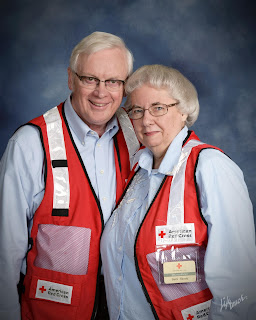
And you know how the old saying goes, the couple that volunteers together, stays together.

Married for 50 years, the couple based out of Allegany County have worked together on everything from Disaster Action Team (DAT) responses to major national disaster operations, highlighting the many diverse opportunities available to those looking to volunteer.

“We worked together as a DAT team very often,” Elizabeth explained. “There are a number of jobs that you can do totally remotely from home and some of them are the hardest to fill. Those volunteers who have a disability or need to operate from home are just as important to use as the people who go out. DAT dispatchers can work totally from home alongside the teams who go out.”

The couple used to responding to disasters themselves were also on the receiving end of a response early on. In 1972 Bob recalled that when 12 feet of flood water damaged the couple’s home, Red Cross volunteers just like them were on the scene to provide shelter and meals until they could repair the damage.

“We can relate to folks who have disasters.”

Reflecting on their evolving roles with the Red Cross over the years, Bob recalled one of their first DAT responses together and what it meant to them as a couple.

“One of the biggest we had was a fire in Cuba. A 15-apartment building and about 45 people impacted. I worked on ten of the cases that day. It was all taken care of in about four hours. It means a lot. You don’t get a better feeling than helping somebody.”

That feeling rings true even more so around the holidays for the couple. Recounting the Christmas they spent together volunteering in New York City in the wake of the September 11, 2001 attacks. Elizabeth led a group of volunteers, spending six months working on the operation helping to input data for more than 30,000 people impacted. Making it a family affair once again, Bob came to spend the holiday with her, both opting to use the time to help others.

“I was able to go and work as an Emergency Response Vehicle (ERV) driver delivering meals,” Bob explained.

“But he didn’t realize part of that was climbing 32 floors to get to some of the apartments, though!”

And 60 years later with no plans to slow down any time soon, the couple hopes their story will inspire others to make volunteering with the Red Cross in any capacity a family affair this holiday season – and beyond.

“The core of Red Cross volunteers have a certain value of humanity that they all share,” Bob explained. “Different religions, colors, ages but we are all caring people.”

“They care about people and they want to help – you can count on that,” Elizabeth smiled. “We keep going because of the people we help. There is no greater satisfaction that knowing you can enable others to pick up the threads of their lives and move forward.”

From DAT responses to local blood drives, supporting military veterans and their families to national disaster operations, you can learn more about volunteer opportunities – both in-person and virtual – here or by contacting RecruitWNY@redcross.org


Tuesday, December 21, 2021

Giving the gift of time this holiday season

The holidays are a time for loved ones to gather, to share food and stories that inspire the holiday spirit; unfortunately, some find themselves faced with tragedy.  Thankfully the American Red Cross (ARC) and its surplus of volunteers are always there to lend a helping hand. 

According to the National Fire Protection Association, Thanksgiving is the peak day for home fires, followed by Christmas Day, the day before Thanksgiving then Christmas Eve.  Cooking equipment and decorations are involved in roughly 20% of these fires.  The ARC is no stranger to providing immediate relief for families displaced by misfortune.  I had the pleasure of speaking with Chuck Haupt, a retired photojournalist, and an American Red Cross Disaster Assistance Team (DAT) volunteer. 

Mr. Haupt remembers one specific fire, that happened in Binghamton, NY the day after Christmas. “It was a five-family apartment building, all of the families were displaced, I had to help”.  Once volunteers like Chuck arrive on a scene, they locate a warm, dry place to get the families inside out of the weather. On this particular day the local Loyal Order of the Moose opened its doors and welcomed the families in, while Chuck and the other volunteers were interviewing the families and tending to their immediate needs.   No sooner did Chuck get his interviews underway, he realized that one of the families did not speak English, “they were very skittish to meet with anyone”, he recalls.  They couldn’t understand that we were there to help, they considered that we might be there to deport them as some suspected they were not in the country legally.  They were assured that the Red Cross’s intent was simply to help! 

The Red Cross provides immediate aid to individuals during a disaster which can include funds for temporary housing, food, and clothing.  Comfort kits are also in huge demand.  These kits contain personal care items like toothpaste, a washcloth, and a comb.  Mental health referrals are also given on an as needed basis along with a directory on how to replace their driver’s license, insurance cards and the likes.

Mr. Haupt, why do you volunteer on holidays when you can be home, with your own family?  “It is simple, someone is hurting out there.  We are volunteers, this is what we signed up for, to get that call for help, whether it is a holiday or any other day that ends in a “y”, they need help”.  

“For me to take three hours away from my family on a holiday to help someone is the right thing to do, I can return to my home and be with my family, they have no home to return to”.  “It reassures us what the holidays are all about – and it’s not about the material things” Chuck stated.  He encourages people to help others this holiday season by donating or volunteering.  

For some people volunteering is about giving but for the likes of you, it is a way of living. Thank you, Mr. Haupt, for all you do!

To learn more about volunteering with the American Red Cross or to donate, visit RedCross.org.

Story by Holly Gassler, American Red Cross of Western New York communications volunteer

Friday, December 17, 2021

'It's the idea of helping': Responding to local disasters has become a holiday tradition for two unlikely friends

On paper, Chris Sadlocha and John Rudolph couldn’t be more different.

Sadlocha is a retired elementary school teacher of 40 years and Rudolph is a former volunteer firefighter and paramedic with an interest in amateur radio. But like many Red Cross volunteers, they have one very important thing in common.

“You know, we’re helpful people,” Sadlocha laughed.

Both drawn to the American Red Cross in the hopes of making a difference in the lives of those facing

emergencies at home in Delaware and Otsego Counties and across the country, the unlikely friends paired up for the first time as Disaster Action Team (DAT) members on New Year’s Eve just four years ago.

“Responding to fires and helping people wasn’t a far spur from what I used to do,” Rudolph explained. “Chris was there to help me. We went out on my first few calls together. He’s been a giant help there.”

As DAT members, those calls regularly consist of being some of the first on the scene in the wake of a disaster – primarily home fires. Red Cross DAT volunteers like Chris and John are often some of the first to meet with families in the wake of devastating home fires and provide support to those who just lost everything.

“We’re there to try and give them some peace of mind. Some funds for food, hotel, clothing, whatever they need to get them stable and figure out the rest. Being able to be there for them in that way may seem like a small thing, but when these people are going through this, it’s something huge.”

In the 2021 fiscal year, Red Cross volunteers responded to 936 local disasters in the Western New York region – the majority of which were home fires – and provided immediate emergency assistance to more than 1,600 families. For Red Crossers like Chris and John, it doesn’t matter the time or the day as they consider themselves always “on call.” In fact, this past Thanksgiving holiday, Chris volunteered his time to answer the call – driving more than an hour to assist a family impacted by a home fire in Susquehanna County, Pennsylvania.

“What are the pieces that drive us? You know, it’s the idea of helping,” Sadlocha explained. “I’m in a warm house, I’ve got plans maybe to go work out in the garden, take a walk, do some reading. Meanwhile, those folks down there have lost their home. They’re experiencing one of the worst days of their lives and we can provide some relief for that. So, we’ll take that drive for that.”

But as they approach another anniversary of their first response together this New Years, they both admit they could also use some help. Over the years, the pair has added considerably to their DAT duties with Sadlocha taking on roles as a Regional Onboarding Lead among others, and Rudolph now assisting DAT responses virtually as a Duty Officer while training to serve as an Emergency Response Vehicle operator on local and national responses.

Always looking to add to the DAT roster and the Red Cross volunteer base in general, the duo is encouraging others to resolve to volunteer with the Red Cross in any capacity this coming new year.

“No matter what the job is, it’s the people working together,” said Rudolph. “I have found that even in the worst cases, people find a way to deal with it and make it as enjoyable as possible.

“Probably the strongest thing I could say to persuade somebody to join the Red Cross is you can really help and provide the relief to somebody that’s having the worst day of their life,” Sadlocha explained. “It’s highly rewarding. There are volunteer positions with the Red Cross that you don’t get in a whole bunch of other places.”

To learn more about available volunteer positions, including the Disaster Action Team, visit redcross.org/volunteertoday or contact RecruitWNY@redcross.org.


Tuesday, December 29, 2020

A Year of Remarkable Challenges

By every measure the year 2020 has been one that won’t soon be forgotten. From a total of seven named hurricanes, five named tropical storms, wildfires that burned over 9.5 million acres and the greatest loss of life caused by tornadoes since 2011, nature’s wrath was felt far and wide. Overshadowing the already very difficult conditions caused by these natural disasters has been a global pandemic, the likes of which hadn’t been seen for generations.    

Nevertheless, despite such serious challenges, the American Red Cross is there to meet the needs and adapt in ways that allow for successfully providing critical basic services to thousands of people affected by such dramatic and stressful conditions. This accomplishment was only made possible by dedicated Red Cross volunteers like the Southern Tier Chapter's Don Lamanna.

A native of the Mohawk Valley, Don is no stranger to working in difficult situations to help others.    Now retired from a 30-year career with the Oneonta Fire Department and service as an emergency medical technician, as well as a motor coach driver, Don notes he wasn’t content with “just sitting around and watching television” news stories about disasters in which he might help out.  So when news of August 2018 flash flooding in the Finger Lakes region came across the screen, he was quick to make his first Red Cross deployment relatively close to home.   Since then Don’s passion for serving others in their time of need has led to his creating a log book so that the number of Red Cross deployments in which his has taken part won’t be forgotten.   In 2020 alone Don’s log gained four new entries which now brings the total number of times he’s deployed since 2018 to 11.   Deployments in 2020 sent him to the Philadelphia area following Tropical Storm Isaias, Baton Rouge and New Orleans in support of hurricane recovery operations, and twice to Oregon wildfires.   

To his further credit, Don performs more than one role with the Red Cross and reports that when he arrives at a deployment the first thing he does is ask what needs to be done that he can help with. Such duties have included damage assessment to determine areas where localized Red Cross assistance is needed as well as serving as a mass care supervisor. During this year’s deployment to Louisiana Don helped supervise the care of 380 displaced people who were provided with accommodations in commercial lodging to avoid the potential spread of COVID-19 in the close quarters of congregate sheltering.   Other adaptive measures were Red Cross services like health counseling that were provided by volunteers remotely by computers. While Don is not shy about acknowledging that his experience and interests don’t include computer skills,  he was equally ready to point out that other volunteers with such skills were close at hand to take care of that part of what was needed. By and large Don was very pleased to observe that, during his deployments this year, the public in general followed Center for Disease Control COVID-19 guidance in a manner akin to that practiced by the Red Cross.

Teamwork and support outside the deployment is also something Don is aware of and keenly appreciates.   When at his home in Oneonta he volunteers several days a week at a busy local food pantry. In his absences that has also included mandatory self-quarantines upon returning home from deployments, other volunteers, among whom his wife, Sallyann, is one, step up to carry out the work he would normally be performing.

Then too, adding even more to the year’s remarkable achievements is the fact that while all of these Red Cross responses to natural disasters were taking place, irreplaceable, ongoing routine services like community blood drives and Disaster Assistance Teams that respond 24/7 to emergencies such as residential home fires likewise continued.   

Whether contributing financially, donating blood, or through volunteer service like Don Lamanna’s, there are a wide range of opportunities for others who would like to be part of the gratifying and crucial work the American Red Cross has provided for almost 140 years.  Learn more by visiting redcross.org.

Story by Robert Eurich, American Red Cross

Tuesday, October 27, 2020

Service runs deep for American Red Cross volunteer

 “Keeping busy by being useful” is a key reason why retired career U.S. Army officer, Bruce Ressner, says he has become an American Red Cross volunteer. In so doing he has joined hundreds of volunteers in the Western New York Region. 

Nationally, volunteers make up 90 percent of the Red Cross workforce who attend to a wide variety of tasks such as running blood drives and teaching classes to providing for emergency needs of those affected by major disasters.  Red Cross volunteers like Bruce come from all sorts of backgrounds and communities but they also share many things in common.  Among those common traits is a desire to help and be of service to others.  Based in the Southern Tier, Bruce knows a few things about service and brings with him a wealth of experience to the roles he plays.


A West Point Military Academy graduate, dad, grandfather, and husband of 28 years to his wife Mary,  “Rezz,” as he likes to be called, only became a Red Cross volunteer in 2019 but quickly stepped up to apply his skills and interests to areas of need. One of the tasks he takes care of is overseeing a centrally located Red Cross warehouse containing everything from cots, blankets, personal comfort kits and shovels to power generators and lights.  

Not surprisingly, Bruce also participates in Service to the Armed Forces, logging between 80 to 120 follow-up calls a month helping to ensure military personnel and their families are aware of counseling and support that’s available to them.

Although health concerns associated with the COVID-19 pandemic has put a hold on  the Red Cross “Sound the Alarm” initiative, Rezz has likewise taken part in the project that installs free smoke alarms in homes and offers fire safety information to families.   When not dedicating his time to the Red Cross, Bruce also serves as a driver for Meals on Wheels as well as filling in where needed at the Binghamton German Club.

Adding to his impressive dedication to service, Rezz went on his first Red Cross deployment this year in support of services being provided to Texas and Louisiana following Hurricane Laura.   Deploying again is something he says ranks high on his list of goals.

While not everyone can engage in as robust a manner as Bruce has, whether contributing financially, donating blood or through volunteer service, there are a wide range of opportunities for others who would like to be part of the impactful, ongoing work the American Red Cross has provided since its founding in 1881.  Learn more by visiting redcross.org/volunteertoday


Story by Robert Eurich, American Red Cross

Monday, July 31, 2017

Red Cross Offers Support After Recent Floods

Photo by @qianliu on Twitter
Early in the morning of Thursday, July 13, dozens of Western and Central New York residents woke up to flash flood warnings on their cell phones, TV's and radios. In the Buffalo area, flash flooding was predicted to last from 10 a.m. to 1:45 p.m.. In under two hours, Buffalo got hit with 1.72 inches on rainfall and over 2 inches by the third hour, marking July 13th the wettest July day in almost 46 years. 

As the city of Buffalo and surrounding areas took on the torrential downpour, cars were submerged and homes were flooded. The streets were so submerged that children were swimming and playing games in the water.

Of course, with a weather disaster of this extent, the flooding caused in-home flood-related damage throughout the area. Once the Red Cross assessed that damage, it was decided that we should give clean up kits to those in need. The American Red Cross was prepared with over 100 clean up kits to distribute throughout several locations in the Western New York Area. 

Clean up kits included mops, buckets, bleach, a broom, a sponge and more to assist in clean up after a flood.  The initial date for the distribution of the clean up kits was July 16th, but that was extended throughout the week as the request for clean up kits increased. 
Clean up kits at the Harris Hills Methodist Church, Williamsville, NY

The majority of our clean up kits are kept at the Harris Hills Methodist Church in Williamsville, NY, where they were made available to the public the week after the flood. 

The Red Cross commends all of the rescue teams and the first responders of this disaster for all the lives saved and damaged prevented. As a second responder, the Red Cross is responsible in assisting those affected by disaster in whatever way we can, and we would like to thank our partners and volunteers in assembling and distributing our clean up kits during this disaster. Additionally, we would always like to thank our donors for making what we do possible. In fact, one week later, our volunteers were helping our neighbors in need again, after multiple tornadoes touched down in Western New York, and the Southern Tier dealt with more flooding.

You can help people affected by disasters like flooding and countless other crises by making a donation to support American Red Cross Disaster Relief. Your gift enables the Red Cross to prepare for, respond to and help people recover from disasters big and small. Visit redcross.org, call 1-800-REDCROSS or text the word REDCROSS to 90999 to make a $10 donation. 

~Lily Kaufman, WNY Chapter Communications Intern


Monday, September 2, 2013

American Red Cross Responds to Flooding in Mecklenburg

American Red Cross volunteers are assessing the needs of the evacuation of eight homes due to flash flooding. Families evacuated have been taken to the Mecklenburg Volunteer Fire Company, County RD 6, Mecklenburg, NY.  Water and clean up kits will be available for individuals affected by flooding this afternoon.  If you have been affected in flooded areas and need assistance in a non-emergency situation, please call the American Red Cross at 607-734-3711 and a volunteer responder will assist you. 
"Right now, we're focused on making sure everyone has a safe place to stay," said Judy Coleman, Disaster Services Coordinator," but we'll also be there to help people get back on their feet after the flood waters recede.”
Floods are among the most frequent and costly natural disasters. Conditions that cause floods include heavy or steady rain for several hours or days that saturates the ground. Flash floods occur suddenly due to rapidly rising water along a stream or low-lying area.
The American Red Cross urges you to prepare.  You will be better prepared to withstand a flood if you have the following items available – packed and ready to go in case you need to evacuate your home
  • Water—at least a 3-day supply; one gallon per person per day
  • Food—at least a 3-day supply of non-perishable, easy-to-prepare food
  • Flashlight
  • Battery-powered or hand-crank radio (NOAA Weather Radio, if possible)
  • Extra batteries
  • First Aid kit
  • Medications (7-day supply) and medical items (hearing aids with extra batteries, glasses, contact lenses, syringes, cane)
  • Multi-purpose tool
  • Sanitation and personal hygiene items
  • Copies of personal documents (medication list and pertinent medical information, deed/lease to home, birth certificates, insurance policies)
  • Cell phone with chargers
  • Family and emergency contact information
  • Extra cash
  • Emergency blanket
  • Map(s) of the area
  • Baby supplies (bottles, formula, baby food, diapers)
  • Pet supplies (collar, leash, ID, food, carrier, bowl)
  • Tools/supplies for securing your home
  • Extra set of car keys and house keys
  • Extra clothing, hat and sturdy shoes
  • Rain gear
  • Insect repellent and sunscreen
  • Camera for photos of damage
Responding Appropriately During a Flood
  • Listen to area radio and television stations and a NOAA Weather Radio for possible flood warnings and reports of flooding in progress or other critical information from the National Weather Service (NWS)
  • Be prepared to evacuate at a moment’s notice.
  • When a flood or flash flood warning is issued for your area, head for higher ground and stay there.
  • Stay away from floodwaters. If you come upon a flowing stream where water is above your ankles, stop, turn around and go another way. Six inches of swiftly moving water can sweep you off of your feet.
  • If you come upon a flooded road while driving, turn around and go another way. If you are caught on a flooded road and waters are rising rapidly around you, get out of the car quickly and move to higher ground. Most cars can be swept away by less than two feet of moving water.
  • Keep children out of the water. They are curious and often lack judgment about running water or contaminated water.
  • Be especially cautious at night when it is harder to recognize flood danger.
  • Because standard homeowner’s insurance does not cover flooding, it is important to have protection from the floods associated with hurricanes, tropical storms, heavy rains and other conditions that impact the U.S. For more flood safety tips and information on flood insurance, please visit the National Flood Insurance Program Web site at www.FloodSmart.gov.
Recover After Flood ,Recovery Tips:
  • Return home only when officials have declared the area safe.
  • Before entering your home, look outside for loose power lines, damaged gas lines, foundation cracks or other damage.
  • Parts of your home may be collapsed or damaged. Approach entrances carefully. See if porch roofs and overhangs have all their supports.
  • Watch out for wild animals, especially poisonous snakes that may have come into your home with the floodwater.
  • If you smell natural or propane gas or hear a hissing noise, leave immediately and call the fire department.
  • If power lines are down outside your home, do not step in puddles or standing water.
  • Keep children and pets away from hazardous sites and floodwater.
  • Materials such as cleaning products, paint, batteries, contaminated fuel and damaged fuel containers are hazardous. Check with local authorities for assistance with disposal to avoid risk.
  • During cleanup, wear protective clothing, including rubber gloves and rubber boots.
  • Make sure your food and water are safe. Discard items that have come in contact with floodwater, including canned goods, water bottles, plastic utensils and baby bottle nipples. When in doubt, throw it out!
  • Contact your local or state public health department to see if your water supply might be contaminated. You may need to boil or treat it before use. Do not use water that could be contaminated to wash dishes, brush teeth, prepare food, wash hands, make ice or make baby formula!
Let Your Family Know You Are Safe
If your community has experienced a disaster, register on the American Red Cross Safe and Well web site to let your family and friends know about your welfare. You may also call 1-866-GET-INFO to register yourself and your family.