Showing posts with label be red cross ready. Show all posts

Friday, July 27, 2012

Mother Nature's Angry Return

Photo courtesy wetmtv.com
After a summer full of sun and heat, some severe weather returned to the area yesterday. While many of us here in the Buffalo area simply received some much needed rain, other places weren't so lucky. The Southern Tier was hit with severe thunderstorms, and a possible tornado wreaked havoc just over the state border in Pennsylvania. Another possible tornado touched down a little further to our east in Elmira, NY, where the local Red Cross chapter has opened a shelter at the Elmira Free Academy. Volunteers were housing and providing food for as many as 50 residents this morning, and the damage was so severe Gov. Cuomo has declared a state of emergency in Chemung County.

While our thoughts are with everyone dealing with the devastation this wild weather caused, this also serves as a reminder of the importance of emergency preparedness. It's easy to become complacent when the weather is as beautiful as ours has been this summer. But disaster can strike anytime, anywhere, often without warning. If these storms had been just a few miles further north, would you and your family have known where to go to stay safe, or had time to gather needed items like food, water and necessary medications if forced to evacuate?

The time to prepare for an emergency isn't when the severe weather warnings are posted. There are three steps everyone can take that can help make a difference: Get a Kit, Make a Plan, and Be Informed. Take a few minutes now to review these tornado and thunderstorm safety checklists, and consider scheduling a free disaster preparedness education program at your school, business or other organization.

When a disaster does hit, you can find Red Cross shelter locations online, and you can download the shelter finder app on your iphone. You can also register as Safe & Well, which is a great way to let your loved ones know that you are okay. Make sure that when Mother Nature decides to make her next visit, you are Red Cross Ready!

Monday, April 30, 2012

It didn't happen this time, but...

A week ago today, Western New Yorkers were bombarded with predictions of "snowmageddon". Heavy, wet snow was supposed to blanket the area, bringing down trees and power lines in a scene reminiscent of our October Surprise in 2006. The predictions were so dire, the Weather Channel even sent Jim Cantore to Orchard Park to cover the devastation.

L-R: Ken Turner, Julie Rapp, Susan Peek and Diane Sargent
discuss emergency response plans for
predicted spring snow storm.
Here at the Red Cross, we prepared for the worst. Potential shelter locations were put on standby in each of the eight counties of the Greater Buffalo Region, and staff and volunteers were lined up to operate them. Emergency services directors here at our regional headquarters took part in multiple conference calls with their counterparts in the Southwestern New York and Tri-County Chapters to coordinate any possible response and ensure that the Red Cross was ready help wherever needed. We were also in constant contact with emergency managers at the state and local level to coordinate potential action.

As we all now know, "snowmaggedon" never materialized. Some parts of WNY did receive some measurable snowfall, and there were scattered power outages, but there was never any true emergency and no actual disaster operations were necessary. The most exciting part of Jim Cantore's time in Orchard Park turned out to be a visit from Santa Claus!

That doesn't mean we should all start treating the weatherman like the boy who cried wolf, however. Anyone who was here in October of 2006 knows how important being prepared ahead of time can be, and disasters can happen any time, whether the meteorologists predict it or not. If you want to learn to what steps to take to make sure you're Red Cross Ready when disaster predictions actually do come true, set up a free preparedness education program at your school, business or organization.

Here at the Red Cross, the false predictions gave us a chance to test our emergency response capabilities throughout the region in real time. By coincidence, we had a a recap of our March disaster drill scheduled for last Wednesday, and we took that opportunity to discuss what went well during our preparations for the spring storm, and what we could've done better. So we'll keep watching the weatherman, and we'll be ready to respond when the boy actually does see the wolf!

Wednesday, January 11, 2012

Staying prepared, despite the warm winter

Many of us are enjoying this warmer-than-usual winter weather. It's mid-January, and I have yet to break out the snow shovel!  However, we are always encouraging everyone to "Be Red Cross Ready" for an emergency ahead of time, so what good would we be if we didn't do the same?

When and if the snow hits, it's entirely possible that we could find ourselves needing to open a shelter or warming station as we did after lake effect snow shut down portions of the NYS Thruway in December 2010.  The people coming to the Red Cross for help will expect to be provided warm, clean blankets.  Many of those blankets made their way downstate last fall to be used in shelters following the flooding and power outages caused by Hurricane Irene and Tropical Storm Lee.  But thanks to the support of the Western New York community, we're once again ready to help when called upon!

Amanda Campbell re-stocks trailers with blankets cleaned
by The Laundry Lounge in Niagara Falls
One of our Board members, Gregory Ford, owns The Laundry Lounge on Niagara Falls Boulevard in the Falls.  Mr. Ford and his staff cleaned and packaged 196 blankets for us at no charge!  And as if that wasn't enough, Laundry Lounge employees have also made generous donations in support of the Red Cross mission!

These blankets have now been packed into trailers along with other supplies in preparation of a winter storm or sheltering operation.  So while we may all hope that winter never truly arrives, the Red Cross will be ready if it does, thanks in no small part to the folks at a Niagara Falls laundromat!!

Wednesday, October 12, 2011

Surprise!! Where Were You, Five Years Ago Today?

If you were living in Western New York at the time, you likely have vivid memories of October 12th, 2006.  At the time, I was not yet fortunate enough to be a member of the Red Cross family.  I left for my job at a local tv station that afternoon, thinking it was a little chilly and cursing those pesky white flakes for falling so early in the year.  As the evening wore on my wife called, very concerned.  She was hearing a constant cracking noise and was afraid a tree was going to fall into our house.  Later, she said we had lost power, branches were coming down everywhere, and she was going to a friends house.  That tree eventually did fall into our house, but instead of crashing through it just leaned against the structure.  Others weren't so lucky.

Back at the tv station, the sports office didn't have any windows, so we were pretty isolated from the outside world.  "How bad can it be?" I thought, and in my stubbornness I drove home at the end of the night.  Five years later, I still don't know how I made it.  Everywhere, trees and debris lay in the streets, and all the street lights were out.  Over the next several hours, the damage caused by the October Surprise storm became quite clear.  400,000 Western New Yorkers were without power (ours was out for a week) and 80% of roads in the area were impassable, according to the New York State Thruway Authority.  The impact can still be seen today, as some once tree-lined streets remain empty.

During times like the October Storm, people turn to the Red Cross to turn Heartbreak into Hope.  Even though they had their own cleanup issues to deal with, our Disaster Action Team worked with the emergency management teams of the City of Buffalo and Erie County to open multiple shelters across the area, giving those with nowhere else to turn a warm place to stay.  As always, our volunteers and staff members gave up their time and talents to help their neighbors in need over the days and weeks that followed.


The events of five years ago are called the "October Surprise" because no one saw that storm coming.    It's difficult to think about today with temperatures in the 60's, but we urge you to take steps now to make sure you're prepared before the next disaster strikes.  We have some winter storm safety tips on our website, and encourage you to schedule a free disaster preparedness program at your school, business, or organization.

Everyone who was in Western New York on October 12th, 2006 has their own storm stories.  Please share your October Surprise memories in the comments section here or over on our Facebook page, and when you're done, take a few minutes to make sure that emergency kit is ready to go.  You know, just in case!!

Wednesday, September 21, 2011

Preparedness month... day 21

Photo courtesy of techpin.com
It's preparedness month! And we’re celebrating with 30 days full of tips on our favorite topic… preparedness!! If you’ve missed out on any of them, click here to take a trip through the month of September and catch up!!

Preparedness Tip #21
Read the information on your city, county and/or state government Web sites as well as the “Be Prepared” section of www.redcross.org or Ready.gov and print emergency preparedness information. Be sure to keep a copy with your disaster supplies kit. 


It can provide telephone numbers, addresses and other information you need when electronic connections are not available options for obtaining the information.

Monday, August 22, 2011

My favorite!

Photo courtesy of SOSReady.com

Presentations are a big part of my position here at the American Red Cross, and over the months I have developed specific passions for sections of each presentation I give.  For example, my favorite part of the Be Red Cross Ready presentation is the “get a kit” portion.  Why you ask? I a very hands on person, and my audience always seem to come alive when I start asking for volunteers to come up and pull items out of my To Go kit.  Not only do they get to get up and stretch their legs, but it's always very interesting, and sometimes humerus, to hear what people, young and old, would use items such as a bag or rubber-bands for during an emergency. 

By the end of this show and tell portion, there are cans, bottles of water, emergency blankets, socks, play money (which is in my kit to represent real money!), granola bars, and books splayed over desks, but I try to save my favorite item for last... my radio!! 

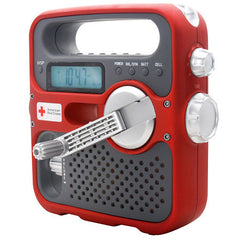
Now, every emergency kit should have a battery or crank powered radio in it so that if the power goes out, you'll still be able to know what is going on in the community.  But I just happen to have a super fantastically deluxe version, which always inspires” ooo’s” and “ahh’s” from my audiences. 

This handy gadget, pictured above, has a built in LED light, a red flashing strobe light, 4 different power sources (crank power, batteries, electric, and solar power), a USB cell phone charger, NOAA weather-band with alert, and an AM/FM digital tuner!! And to top it all off, it is red!   

Do you have a favorite item in your emergency kit? If yes, please share below!!

Don’t have an emergency kit yet? Click here to get more information on how to make one!
Want to get one of these handy all in one radios? Click here to order one!

Monday, August 1, 2011

Disaster Preparedness in Nepal

Photo courtesy of Rob Few/ IFRC
and www.redcross.org

The American Red Cross is there for people down the street, across the country, and around the world, and that’s evident in central Nepal where 30 years ago a series of violent earthquakes struck the village of Kalikahalde.   

Since 2009, the American Red Cross has been working with the Nepal Red Cross and the National Society for Earthquake Technology to establish a disaster preparedness program in 220 schools in Nepal.  More than 16,000 people have benefited. 

“I don’t feel fear of earthquakes while sleeping at night because I have kept heavy things on the floor, identified safe places at home, prepared how to go out safely in a safe place after earthquake, packed some ready-made food and safe water and learnt how to communicate,” said Janardhan K.C. of Changu Narayan in the Bhaktapur district. 

The disaster preparedness programs educate students, teachers and parents about designing and implementing disaster preparedness and response plans which details each school’s vulnerabilities, such as identifying existing cracks in walls or close proximity to a riverbank, and ways that the risks can be reduced.

“We have now learnt how a school building should be constructed and we are applying building codes in the newly constructed block for disaster safety, leaving enough space for rescue and evacuation,” said Purendra Prasad Dhakal, headmaster of Ganesh Secondary School in Nuwakot, one of the participating schools in the program.

In addition to this education, trainings in first aid, basic disaster management, and light search and rescue techniques are also being taught, as well as disaster drills and simulations to ensure that students, teachers and community members feel prepared for future disasters. 

To learn more about the efforts to prepare Nepal, click here to visit the National Red Cross Chapter.
To learn more about disaster preparedness, click here to visit your local Red Cross Chapter.

Sunday, July 17, 2011

Because of you

Tornadoes can come and go with little warning, causing a family to lose their home in an instant.  Families often have time to prepare for floods, but when the flood waters finally come in, they come in fast. In these darkest of times, individuals and families turned to the American Red Cross and its generous donors like you for shelter, food, emotional support, and emergency assistance. Missouri residents whose lives were turned upside down by the tornado were given vital necessities such as hot meals and snacks, hygiene kits, and health and mental health support. More than 390.000 meals and snacks were served at shelters and throughout the communities by Red Cross Emergency Response Vehicles that were circulating through affected communities. American Red Cross President and CEO visited Joplin in the early days of the response. Moved by what she saw, she explained,

“The devastation that I have seen is truly indescribable. Everywhere you look, buildings are toppled, homes are destroyed, things are in shards, and the community is working so hard to recover and bounce back. It’s heartbreaking, and I’m very very proud of what the American Red Cross is doing to help the people of Joplin. We have a shelter stood up where we are feeding and sheltering people who have lost everything. We have Emergency Response Vehicles that are driving through communities, delivering food, meals, snacks, clean-up kits, comfort kits. We have mental health counselors here providing psycho-social support for the people of Joplin. It is a massive undertaking.”
Photo courtesy of the International Buisness Times
As the Red Cross met the immediate needs of the people affected, Disaster Assessment (DA) teams were sent out to determine resources and staff that would be necessary for an efficient and effective response. Red Cross DA teams visited thousands of homes to determine the effect on residents and to make sure we help. Caseworkers are following up with these affected residents to help them get their lives back on track.
As of June 27, 2011, the Red Cross has:
• Opened 33 shelters for affected residents
• Provided nearly 8,200 overnight shelter stays
• Served more than 390,000 meals and snacks
• Distributed more than 5,000 hygiene kits and clean-up kits, which includes essential items such as mops, dust masks, and gloves.
• Provided approximately 175,000 bulk items, such as rakes and tarps
• Enlisted the hard work of approximately 1,350 Red Cross workers
• Deployed 36 Emergency Response Vehicles
• Consulted nearly 15,000 affected residents on their health and mental health needs.
With your support, the Red Cross can be there for families and individuals affected by disasters. Thank you for helping us continue this life saving work. Your support is critical to providing a safe, warm and dry place to stay, food, emotional support and many other kinds of assistance- whenever and wherever disaster strikes. 
To learn how you can help, visit us online at www.buffaloredcross.org.
Article and data courtesy of The American Red Cross.

Monday, July 11, 2011

What do you keep behind your ID?

As I was helping put together materials for a fantastically fun scavenger hunt we’re participating in at the end of the week, I was racking my brain for more things to put in the mock emergency kits, when I realized… what about emergency information!! After this almost too obvious answer to my question, I couldn’t help but feel that we have been slightly neglecting that topic in this blog. So, I fully plan on rectifying that situation right now!
If you were to collapse or were somehow injured and unable to communicate, would people know how to contact your loved ones? For me, that answer is yes.  And not just because I never part ways with my cell phone.  My phone does have ICE programmed in and I have all of my families information plugged in as well, however, I also carry an emergency contact sheet in my wallet.  That way, when first responders are looking for my identification, they’ll pull out my ID and see everything I need them to know about me.  On this sheet is my:
·         Name
·         Date of birth
·         Address
·         Medical history
·         All of my doctor’s phone numbers (Whether you have a foot doctor, back doctor or general physician, ALL of your doctors should be listed, you’ll never know who you need!)
·         Medication I take, including the dosage and frequency I take it
·         Allergies
·         Blood type
·         Emergency contact information for 3 individuals (2 local and 1 out of the area)
Because of this, I feel much safer and secure walking and driving around, because if something were to happen to me, I know that I have a much better chance of receiving the proper medical care and the people that are important to me will be contacted so that they aren’t wondering why I never made it to brunch.
So now comes the question, do you have all of this information written down and in your wallet, bag, purse, or book bag?

If you DON’T have all of this information near your I.D. already, I highly suggest clicking one of the following links for a template, OR, just typing out your information in a word document!
·         Template 1
·         Template 2
·         Template 3
Remember!
·   If you change addresses, develop more of a medical history, begin to take new medications, develop new allergies, or want new emergency contacts, be sure to update your sheet!!
·   Be sure that your emergency contacts KNOW that they are your emergency contacts.
·   Once you fill out this sheet, photo-copy it and stick a copy in your emergency kit, your car, and anywhere else that you spend a lot of time.
o   Don’t have an emergency kit? Click here!
If you DO have all this information already near your I.D. and your emergency kit packed an updated, awesome job!! You are Red Cross Ready. 

Monday, June 27, 2011

It's grillin' time!!


Out fabulous grill masters at BASH*2011!

Mmmmm nothings better then the intoxicating aroma of a grill in the summer, especially when Sahlens and Mineo & Sapio are on the menu! But the fact that fire departments respond to thousands of grill related house fires each year that reportedly cause millions of dollars of property damage and even some deaths should cause pause when getting ready to strike that match.
But have no fear! With a few precautions, you can be sure to enjoy all the tasty grilled meals you like this summer!
Precaution # 1
Pick the right location
·         Never grill indoors… that includes your house, camper, tent, or any other enclosed area
Precaution # 2
Always supervise a barbecue grill when in use, and make sure everyone (including pets) stays away from the grill
Precaution # 3
Keep the grill out in the open, away from the house, the deck, tree branches, or anything that could catch fire
·         Hot grease or ashes could spill from the grill onto the wooden deck or into dry leaves or grass
Precaution # 4
Use the proper tools and techniques
·         Use the long-handled tools especially made for cooking on the grill
Precaution # 5
Never add charcoal starter fluid when coals have already been ignited
Precaution # 6
Always follow the manufacturer’s instructions when using grills.
Precaution # 7
Be ready to close the lid and turn off the grill to cut off the fuel if necessary
Precaution # 8
Keep a fireproof pan under the grill to catch any falling ash or grease
Precaution # 9
Trim excess fat from meat to avoid flare-ups
Precaution # 10
Before you even start grilling, be sure to follow food-safety practices
·         Wash your hands in hot soapy water before preparing food, after each time you touch raw meat, and after any interruptions such as using the bathroom, handling pets or interacting with children
For more information on how to keep you and your family safe this summer, visit www.redcross.org!
Article information courtesy of the Red Cross.

Wednesday, June 15, 2011

The not so serious side of emergency kit week, day 3!


Photo courtesy of arts journal

Something that we need to remember about our emergency preparedness kits is that they shouldn’t be filled with just the necessities! Sure, we can’t last too long without food, water, and clean air, but we need to take our psyches into consideration.  Emergency preparedness kits should be customized to the person(s) that will be using them, which is why I thought it would be a fun idea to dedicate this week to see what people here at the Chapter keep in their kits that are not “just the basics.”

Nancy Blaschak, the Executive Director of the Buffalo Chapter, always makes sure that she has a book in her kit.  They keep her mind occupied so that even though there may be something chaotic going on around her she can find comfort and solace in the words she’s reading.   In addition to her book, she also likes to keep crunchy foods in her kit.

We'd love to hear what you keep in your kit!! Feel free to comment below!
Don’t have even the basics in your kit? Click here for tips on how to build a fantastic kit that will help you be prepared for anything!

Friday, June 10, 2011

It's going to be raining and storming and the Buffalo wind will be blowing!

Rain and thunderstorms are in the forecast!! And if you’re like me, you always have an umbrella by your side, but when it’s thundering and lightning and the wind is blowing, an umbrella won’t do you much good! So, today we thought it’d be a great idea to highlight some of our favorite rainy/thundery weather gear!
Raincoats
Women
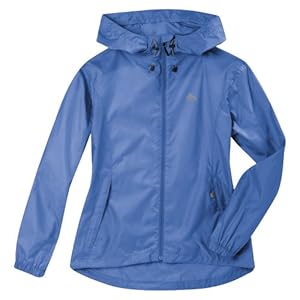
Mossimo Supply Co. Feather Weight Raincoat
photo courtesy of Amazon.com


Women’s Kelty Jacket photo courtesy of Amazon.com
 Men


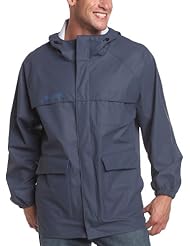
Columbia Men's Shelter Cove Jacket photo courtesy of Amazon.com


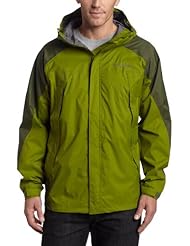
Columbia Mens Raintech Jacket photo courtesy of Amazon.com

 Pets

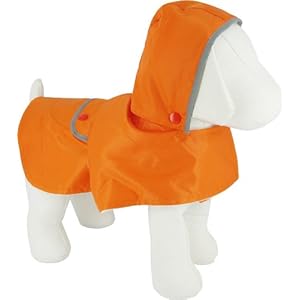
Search & Rescue Dog Clothing by Kakadu Pet photo courtesy of Amazon.com


Rainboots

Women

Western Chief Women's Corina Rain Boot courtesy of Amazon.com


Bogs Women's Classic High Corsage Boot courtesy of Amazon.com


<> 
<>
 
Sloggers Women's Midsummer Tallboot courtesy of Amazon.com

Men


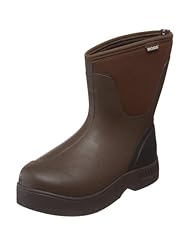
Bogs Men's Tradesman Mid Boot courtesy of Amazon.com


Bogs Men's Tradesman Tall Boot courtesy of Amazon.com


Pets
Photo courtesy of jessicasoriginal.biz


For more information on thunderstorms, click here!

Thursday, June 9, 2011

If thunder roars, go indoors!

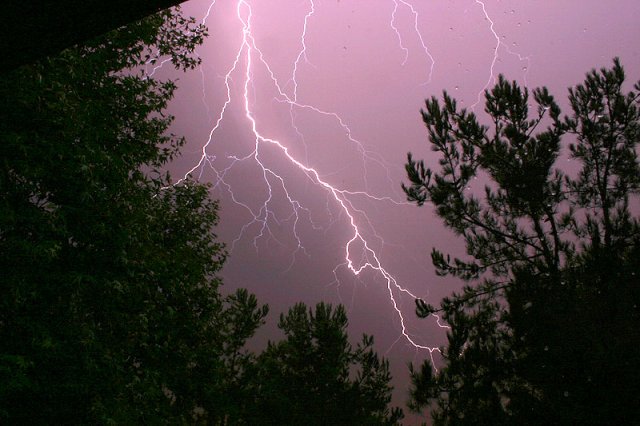
Photo courtesy of weathercurrents.com
Thunderstorms! Something we’re pretty used to here in WNY.  Every year people are killed or seriously injured by these storms, so it’s not something to be taken lightly.   
When the meteorologist is talking about all of those cold fronts and warm fronts and the watches and the warnings, we often get lost in the words. 
So the first step is to know the difference:
·         A thunderstorm is defined as severe if it produces hail at least 1 inch in diameter or has wind gusts of at least 58 miles per hour. Every thunderstorm produces lightning, which kills more people each year than tornadoes or hurricanes. Heavy rain from thunderstorms can cause flash flooding and high winds can damage homes and blow down trees and utility poles, causing widespread power outages.
·         A severe thunderstorm watch means that severe thunderstorms are possible in and near the watch area and that you should stay informed and be ready to act if a severe thunderstorm warning is issued.
·         A severe thunderstorm warning is issued when severe weather has been reported by spotters or indicated by radar. A warning indicates imminent danger to life and property.
Now that we know that, what should we do during a severe thunderstorm?
·         Listen to local news or NOAA Weather Radio for emergency updates.
·         Watch for signs of a storm, like darkening skies, lightning flashes or increasing wind.
·         Postpone outdoor activities if thunderstorms are likely to occur. Many people struck by lightning are not in the area where rain is occurring.
·         If a severe thunderstorm warning is issued, take shelter in a substantial building or in a vehicle with the windows closed.
·         Get out of mobile homes that can blow over in high winds.
·         If you can hear thunder, you are close enough to be in danger from lightning. If thunder roars, go indoors!
·         The National Weather Service recommends staying inside for at least 30 minutes after the last thunder clap.
·         Avoid electrical equipment and telephones, use battery-powered TVs and radios instead.
·         Shutter windows and close outside doors securely.
·         Keep away from windows.
·         Do not take a bath, shower or use plumbing.
·         If you are driving, try to safely exit the roadway and park. Stay in the vehicle and turn on the emergency flashers until the heavy rain ends.
·         Avoid touching metal or other surfaces that conduct electricity in and outside the vehicle.
·         If you are outside and cannot reach a safe building, avoid high ground; water; tall, isolated trees; and metal objects such as fences or bleachers. Picnic shelters, dugouts and sheds are NOT safe.
 For information on how to prepare for thunderstorms, click here!

Wednesday, June 8, 2011

Are you prepared to travel?


Photo courtesy of newsone.com and AP.
As the weather warms up, we often pack our bags and begin to travel away from our safe haven here in WNY.  No longer are snowstorms, flooding, and the occasional house fire the only things you need to worry about... You may now be in crosshairs of an earthquake, tornado, or even a hurricane!
This is why we urge everyone to learn all they can about what you do during those types of disasters so that regardless of where you are in the world, you’ll be prepared!! So today, we’ve decided to talk about hurricanes!

What is a hurricane?
A hurricane is a strong storm that can cause life­and property­threatening hazards such as flooding, storm surge, high winds and tornadoes.
What are the different type of hurricane warnings?
A hurricane watch is when conditions are a threat within 48 hours. Review your hurricane plans, keep informed and be ready to act if a warning is issued.
A hurricane warning is when conditions are expected within 36 hours. Complete your storm preparations and leave the area if directed to do so by authorities.
Don’t have your emergency kit yet?
Emergency preparedness kits should be made so that you can respond to any sort of emergency, whether it is a fire, flood, tornado or earthquake, you should be able to grab your kit and survive on your own for a minimum of 3 days. 

Haven’t made your kit yet? Want to learn more about hurricanes? Click here to learn more.

Wednesday, May 18, 2011

MacGyver like first-aid

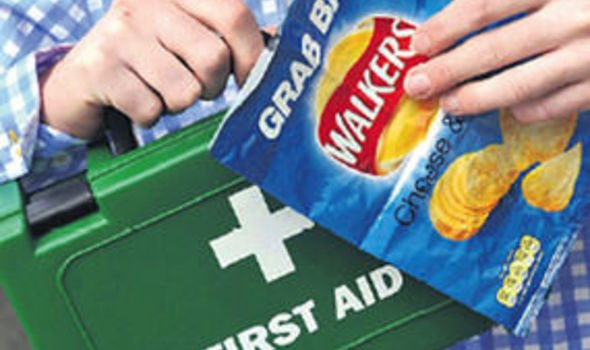
Photo courtesy of the article
"Could an empty crisp packet save your life?"
by Kate Hilpern of  express.co.uk
Germs!!! No one wants them, and although you might be faced with a life threatening situation where a stranger needs mouth to mouth, you may stop yourself with the worry of contracting goodness knows what. Which is why when you take a CPR course, instructors often advise you to carry  a breathing barrier with you to avoid skin to skin contact.
On top of this type of item, you’re also advised to have a whole array of items in your medicine cabinet arsenal, which quite frankly, few of us have! Luckily, we’ve found this nifty article published by EXPRESS in the United Kingdom which suggests some interestingly MacGyver like everyday household items that can create loopholes to purchasing a number of the expensive first-aid tools that people rarely use. 
For example
Insect stings generally just cause pain and irritation for most of us, however, others can have life threatening reactions which can cause anaphylactic shock.  Regardless, a top priority for any sting is making sure that the stinger is removed.
So, here is a little trivia question for you…
What is the best way to remove a stinger?
A.      Tweezers
B.      A needle
C.      Credit card
You should never squeeze or use tweezers to remove a stinger because there is generally a sack of poison at the end of it which you could squeeze, causing the wound to be even worse.  This is why C, a credit card, can come in handy… it can also come in handy when buying a new camo outfit for the upcoming BASH! 
You should use a credit card to scrape the stinger cleanly off the skin, taking care to not break the stinger under your skin. 
If the person stung has a known allergy, ask them if they have any type of EpiPen, call their doctor or 9-1-1 and follow the instructions given by the medical professional.
For everyone else, not much will help the pain of a sting besides time, and a compress of ice wrapped in a towel. 
For more MacGyver like first-aid tools, read the full story!!

We always suggest you have a first-aid kit and basic first aid items in your household instead of relying on MacGyver like tools, so click  here to visit our store to get yours and check out some of the other cool Red Cross paraphernalia we have there as well!