Wednesday, February 23, 2022

Red Cross, Quilts of Valor Foundation Collaborate to Honor Local WWII Vet


Thanks to the actions of a thoughtful and resourceful local Red Cross Volunteer, a Rochester-area WWII veteran was honored more than 75 years after serving his country. Joseph Young, Jr., who served as a Second Lieutenant in the U.S. Army’s 20
th Corp under General George Patton’s command, received a Quilt of Valor at a gathering at the Greater Rochester Chapter of the American Red Cross office at 1040 University Avenue on Wednesday, February 23, at 12:00 p.m. U.S. Congressman Joe Morelle, representing New York’s 25th Congressional District, will also be on hand to honor Young.

Red Cross Community Volunteer Leader Laurie McFaul Frey, who in December accompanied the 98-year-old veteran to a Wreaths Across America ceremony to honor deceased U.S. service members, discovered that he had never been honored for his service in WWII by any local group or program. Through a collaboration with Red Cross staff and volunteers, including Services to the Armed Forces (SAF) Chair Susan Louis, a request was made to the local Chapter of the Quilts of Valor for a hand-made quilt for Lt. Young. Barbara Frost, New York State Coordinator for the Quilts of Valor Foundation, will present the quilt to Young.  


A native of Rochester, Young entered the military in December 1942 and was assigned to 20th Corp, a part of Patton’s vaunted 3rd Army, with which he served until December 1945. Second Lt. Young was part of the second wave on Omaha Beach during the Normandy Invasion on June 6, 1944, and fought on from France through Austria. For his bravery and service, 2nd Lt. Young was presented with four medals - a Good Conduct medal, a WWII Victory medal, European African Middle Eastern Campaign with Three Stars, and an American Campaign. 

After his discharge, Lt. Young came back to Rochester and worked at Taylor Instruments for a few years before accepting a position at Eastman Kodak, where he worked for 36 years until his retirement in 1985. In 1949, he married his lovely wife Helen Rose Jordan. They were married for 54 years and had three children: Joseph, Deborah and Robert. They also have five grandchildren and three great grand children

Catherine Roberts, whose son, Nat, was deployed in Iraq at the time, founded Quilts of Valor in 2003 after experiencing a dream of a service member in despair gaining comfort after being wrapped in a quilt. Since that time, it has evolved into a movement of over 10,000 volunteer members across 600 groups in all 50 States. The organization’s primary objective is to bring healing to service members and veterans through an expression of gratitude and the belief that the quilts bring a tangible comfort to those who receive them. This year, Quilts of Valor expects to reach the milestone of awarding its 300,000th quilt to a veteran.


Red Cross Service to the Armed Forces Program:

While many recognize the American Red Cross as an organization that collects and distributes blood products and responds to local and national disasters, its Service to the Armed Forces program (SAF) has a long and storied history of supporting the military and is a prominent and valuable asset the organization provides within communities throughout the nation. Today, the American Red Cross continues to serve the U.S. Military community from the time a service member takes the oath to navigating life as a veteran. The Red Cross SAF program holds a congressional charter to provide the direct link of communication between the active-duty service member and their family at home.

In the Western New York region alone, the Red Cross provided 3,487 case services to veterans and family members during the last fiscal year. On a global perspective, each year, the Red Cross provides more than 500,000 services to members of the military, veterans and their families across the country and around the world.

  • In times of emergency, the Red Cross helps military families communicate with their loved ones and facilitates their return home through our Hero Care Network, which is available online, by phone, through a mobile app or in person, 24 hours a day.
  • A variety of free resiliency workshops are offered, in person and online, to provide active military, veterans and their families with effective tools for facing challenges and stress.
  • Red Cross medical and non-medical volunteers provide care, comfort and therapy items at veteran hospitals and military treatment facilities.
  • Stateside the Red Cross has a presence on all military installations.  It also offers programs and services on-site at more than 140 military medical facilities and 170 veteran’s care facilities worldwide.   


Thursday, February 17, 2022

In their own words: Horseheads mother who required 33 units of blood following labor complications shares her story

Every two seconds someone is in need of blood.

So often we talk about that need – and the ongoing national blood shortage – in terms of our hospital partners and what that it could mean in the event of an emergency. Its significance is another matter entirely, when you’re able to see it in action or hear from those patients and their families who’ve directly benefitted from blood donations thanks to the generosity of volunteer donors.

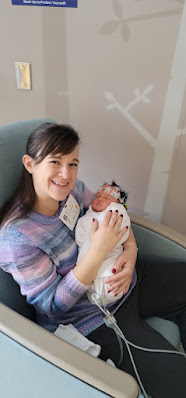
Last week, I had the opportunity to speak with Jason and Kristina Harris about the traumatic events that followed the birth of their daughter Eva in December that would have cost Kristina her life had it not been for multiple volunteer blood donors.

Below is a portion of that interview.

MR: I want to thank you guys for speaking with me this afternoon and for sharing your story with us. First and foremost, how are you all doing? How are you adjusting with your little one?

Kristina Harris: Well, other than adjusting to life with a newborn and getting less sleep and not being able to control our schedules, we're doing really well. We are happy to have these problems, so these are the these are good problems to have. Healing is going well!

MR: Absolutely and we’re glad to hear it. Talk to me about that day back in December and take me through what happened.

KH: Sure, so I'll start. I was out for a lot of the day so Jason can fill in the gaps. The facts just before we get into the experience of it, I went in to be induced for my second child and we have a 3-year-old who's just really terrific. She's bright and joyful and precocious. Really loving. And so we love being parents and were really excited to add to our family. Our three-year-old was thrilled to have her wish of having a little sister come true. She came up with the name Eva when we first told her that she was going to have a sister.

And so we went in to be induced, and things were going fine. I was sleeping around 4:00 o'clock in the morning, and I sat up and I felt really big pain. I felt like three big kicks to my left side and then like blinding pain across my ribs and a lot of difficulty breathing, and I assume that's when the placental abruption happened. Which means that the placenta detached completely in my case, which is really dangerous for me and for the baby because the baby can’t get the oxygen and other things she needs. But I didn't know that. I just felt the pain and I thought this is really bad.

Thirteen years before my parents had me, they lost a full-term baby because of a cord accident. She wanted to be induced. The cord came out and the doctor pushed it back and she felt a big kick, and then that was it. So when I felt three big kicks and pain, I didn't necessarily think that was a problem, but I thought this reminded me of my mom’s situation and I thought this is really scary and bad.

My memories after that point are few and far between. I remember when I was being prepped for the C-section, the emergency C-section, I asked the doctor if my daughter and I were going to be OK and he said he would do his best. And I had this thought that this is it for me, and that was before the real trouble began. So that's when I went out and Jason can pick up the story from there.

JASON HARRIS: So, they took Kristina back for the emergency C-section pretty quickly. I’d gotten word that Eva had been born and they were sewing up Kristina, so I thought we were in the clear at that point. A few minutes later the doctor came out to talk to me. Kristina’s body had used up all of its coagulation factors and basically there is nothing stopping the blood from pouring out of Kristina.

I could see the hallway that went into the emergency room, and I nervously watched as things had gotten worse and worse. The first thing I saw was the cart. I knew that the cart had a lot of blood products, I think it was red and white and then you know, I knew it was serious. I knew that there was a lot of bleeding and I saw a lot of other people coming through with different size coolers. I knew that she was bleeding a lot and I knew that, you know, there’s a finite supply of blood even in the best of circumstances and just thinking that I hope they had enough for her. What we later heard was that they actually had to bring in some blood products from the hospital in Elmira.

Kristina was later transported by helicopter from Corning Guthrie Hospital to Robert Packer Hospital in Sayre. Nearly 8 hours after suffering a placental abruption, doctors completed surgery and relayed to Jason that Kristina was doing well.

JH: It was a little tough to see Kristina in that kind of situation. She did a really great job recovering and you know, all the doctors that I talked with were very professional, very considerate but very honest. They were very clear that Kristina’s condition was extremely critical. But something changed and it started to work, and they did a great job, both surgical teams and we’re happy to have her here today.

MR: Absolutely. Kristina, what was going through your head when you woke up and started to realize the gravity of the situation?

KH: You know, I don’t remember too much. I wasn’t really surprised when I found out that it was not good. When I heard that they wanted to transfer me by helicopter to a hospital that was only a half hour away, I thought that was, you know, pretty serious. It was very strange to wake up knowing that I had had a baby and not be able to see her.

I didn’t know that Jason was trying to sort of shield me from any negative information about the baby, he just sort of said that she was doing OK. We later found out that she might have some problems. So she was in the NICU at Arnot Hospital and then was transferred to Rochester to another NICU. So I was in Pennsylvania and my baby was two hours north in a different hospital.

I was in a lot of pain, but I couldn’t really embrace the emotions. I’m an emotional person, but I had to shut that down anytime I would start to cry. The pain was unbearable, so I was very relieved to have my husband there. I was relieved to have my Dad there, and I was so grateful. I didn’t really learn until later the magnitude of the blood transfusion and that it took 33 people to donate for me to live. It felt and still feels surreal. I know that that happened, but I was out for a lot of it. I remember a couple of times being scared for my life and for my babies and now when I’m holding my baby and feeding her and doing all the things and dancing with my three-year-old and playing with her – I just feel overwhelming gratitude. 

That I’m here and that my daughters have a mother, and I’m so grateful that my husband has his wife. And hopefully, you know, we have a long future in front of us.

Kristina, Jason and their daughters are all doing well and settling into life as a family of four, with baby Eva growing two inches in her first month. The events of that day and the impact of blood donation on patients in need, as well as their loved ones is not lost on either Kristina or Jason. Both are planning to become blood donors themselves and, in the meantime, are encouraging others to make an appointment.

KH: You know, I feel really bad for my husband and for our families that they went through most of that day, thinking that they were going to lose me. For my husband to sign the birth certificate not knowing what was going to happen to either one of us, he had to do that alone. And you know, and my dad, having lost a baby himself, he almost lost my mother after that. For him to see me that way. I know he told my mother that when he saw me before my third surgery, he thought that was going to be the last time he would see me alive.

One thing that really strikes me about blood donation is that you think about saving one person or helping one person to be healthier, but really, I would have been gone. I'm very glad that I'm here. I would have been gone and everybody else would have been left with a hole and grief. I don’t know what life would have been like for my husband and my daughters. If anyone could raise two daughters, it would be my husband, but I’m glad he didn’t have to figure that out and all the difficulties that would come with that.

A full length version of our taped interview can be found here. 

You can make an appointment to donate and help support patients in need like Kristina by visiting RedCrossBlood.org, calling 1-800-RED CROSS or downloading the free Red Cross Blood Donor app.

Meg Rossman, Regional Communications Manager, American Red Cross of Western New York

Monday, January 24, 2022

Spurred by the onset of the pandemic, Rochester blood researcher starts a new donation tradition

The days and weeks that followed the onset of the COVID-19 pandemic in March 2020 were filled with uncertainty. The day-to-day routines to which we’d been accustomed coming to a standstill as the world all but shut down as it eagerly awaited answers.

Educators and employers alike switched to virtual formats, forced to reassess the way in which they served the public with little notice. The American Red Cross and its partners were no exception. Like many organizations, we had to pivot in the wake of these changes both internally and externally to continue our mission-driven work of delivering help and hope, while maintaining a safe environment for our volunteer workforce and the people we are proud to serve.

Since the onset of the pandemic, the Red Cross has experienced about a 10 percent drop in the number of blood donors and a 62 percent drop in blood drives at local schools and colleges, further contributing to what is now a crisis-level blood shortage nationwide. As a result, the nation’s blood supply levels are at their lowest levels in more than a decade. To add to that challenge, locally in 2021 alone, the number of first-time blood donors in our region dropped by more than 34 percent – largely due to the pandemic.

And then there’s Paul Kingsley.

For the Rochester native, the uncertainties, particularly in the early days of the pandemic, seemed to have had the opposite effect.

“I was an occasional donor and hadn’t given for a while. But then I saw something on the media in April or May [of 2020]. Everything was shut down, people were working from home, unemployment was soaring. I was working from home at the time, and they said there’s still a desperate need for blood and they talked about how the bandwidth for donors was smaller. But they went through some of the protections in place to protect them and I decided, I think May of 2020, to donate blood and promote it on Twitter and Facebook to let people know – hey, yes, everything is risky these days, but this is something you can do to actually help people. Blood is the gift of life, so I chose to give.”

Kingsley should know better than anyone. Given his line of work with the University of Rochester for more than 30 years, he has a unique perspective on the benefits of blood donation. Not to mention that his decision to share with others on social media pays off. We first connected, after he tweeted some words of encouragement to potential donors; along with a brief personal background on his decision to donate.

“I'm a research scientist at the University of Rochester Medical Center and I work on blood cell development, including red blood cell development and being in a clinical department, in the Department of Pediatrics, I'm well aware of patients who have various anemias, like sickle cell anemia, how important red cells are – and also for people with cancer, especially kids with cancer. How important transfusions are.”

Nearly two years on from the onset of the pandemic, the ability to supply the lifesaving blood needed to treat those patients in need has never been under greater threat. A number of factors including COVID, winter weather and others have continued to impact the nation’s blood inventory with fewer donations leading to a less than day’s supply of critical blood types in recent weeks and donors like Kingsley are the only source.

“I give probably every eight weeks,” he explained. “Whenever they send me the notice I say ‘Ok, I’ll schedule.’ So I’ve become a more frequent donor and try to make up for people who can’t give or might be concerned about giving.”

But it’s also become more than that for the researcher whose continued penchant for blood donation also began as a way to honor his father’s legacy of donating, through his regular appointments he now makes a point of honoring others.

“There are drives to honor or to recognize people who may have passed on, so sometimes I’ll look and see what’s available. I’ve done that a number of times or made an effort to go to a different place than I normally do just to see the people who show up there and to help to recognize that person and participate.”

Just like Paul, you can participate and make a difference by making an appointment to donate in the days and weeks to come by visiting RedCrossBlood.org, calling 1-800-RED CROSS or downloading the free Red Cross Blood Donor app.

Meg Rossman, Regional Communications Manager, American Red Cross of WNY

Friday, January 7, 2022

After 60 years of volunteering, married DAT responders have no plans to slow down

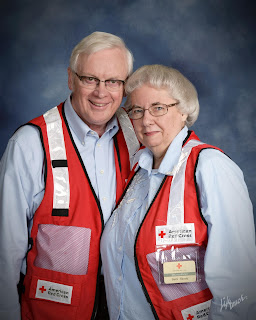
Elizabeth Shook has been volunteering with the American Red Cross since she was 16 years old.

“My mother sort of dragged me into it to start with. So, it was a family thing,” she explained.

She started out as a water safety instructor before moving to training services, instructing others on CPR and First Aid. When getting down on the floor became too much, she made the transition to Disaster Cycle Services assisting with casework following disasters like home fires and then made the move to staff services.

In total, that “family thing” has spanned 60 years.

About ten years into it, she met and married her husband Bob who she then proceeded to “drag into it.”

“When I started, Beth always needed an extra person to make the class roster when she was teaching, so I ended up getting a lot of training,” Bob laughed.

And you know how the old saying goes, the couple that volunteers together, stays together.

Married for 50 years, the couple based out of Allegany County have worked together on everything from Disaster Action Team (DAT) responses to major national disaster operations, highlighting the many diverse opportunities available to those looking to volunteer.

“We worked together as a DAT team very often,” Elizabeth explained. “There are a number of jobs that you can do totally remotely from home and some of them are the hardest to fill. Those volunteers who have a disability or need to operate from home are just as important to use as the people who go out. DAT dispatchers can work totally from home alongside the teams who go out.”

The couple used to responding to disasters themselves were also on the receiving end of a response early on. In 1972 Bob recalled that when 12 feet of flood water damaged the couple’s home, Red Cross volunteers just like them were on the scene to provide shelter and meals until they could repair the damage.

“We can relate to folks who have disasters.”

Reflecting on their evolving roles with the Red Cross over the years, Bob recalled one of their first DAT responses together and what it meant to them as a couple.

“One of the biggest we had was a fire in Cuba. A 15-apartment building and about 45 people impacted. I worked on ten of the cases that day. It was all taken care of in about four hours. It means a lot. You don’t get a better feeling than helping somebody.”

That feeling rings true even more so around the holidays for the couple. Recounting the Christmas they spent together volunteering in New York City in the wake of the September 11, 2001 attacks. Elizabeth led a group of volunteers, spending six months working on the operation helping to input data for more than 30,000 people impacted. Making it a family affair once again, Bob came to spend the holiday with her, both opting to use the time to help others.

“I was able to go and work as an Emergency Response Vehicle (ERV) driver delivering meals,” Bob explained.

“But he didn’t realize part of that was climbing 32 floors to get to some of the apartments, though!”

And 60 years later with no plans to slow down any time soon, the couple hopes their story will inspire others to make volunteering with the Red Cross in any capacity a family affair this holiday season – and beyond.

“The core of Red Cross volunteers have a certain value of humanity that they all share,” Bob explained. “Different religions, colors, ages but we are all caring people.”

“They care about people and they want to help – you can count on that,” Elizabeth smiled. “We keep going because of the people we help. There is no greater satisfaction that knowing you can enable others to pick up the threads of their lives and move forward.”

From DAT responses to local blood drives, supporting military veterans and their families to national disaster operations, you can learn more about volunteer opportunities – both in-person and virtual – here or by contacting RecruitWNY@redcross.org